
Action
Adventure
Animation
Comedy
Crime
Documentary
Drama
Family
Fantasy
History
Horror
Music
Mystery
Romance
Science Fiction
Thriller
War
Western
Found 42 movies, 4 TV shows, and 12 people
Can't find what you're looking for?

Così fan tutte, comic opera in two acts by Wolfgang Amadeus Mozart that premiered in Vienna on January 26, 1790. It is the last of his three operas with librettist Lorenzo da Ponte, the first two being The Marriage of Figaro (1786) and Don Giovanni (1787). Presented by the Salzburg Marionette Theatre with narration by Sir Peter Ustinov.
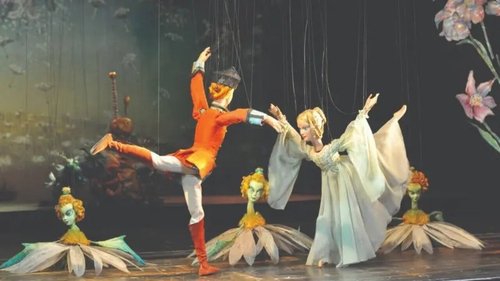
On Christmas Eve, the parents of Clara and Fritz have invited guests. Among them is Clara’s godfather Drosselmeyer, who presents her with a nutcracker. Clara is delighted and finally falls asleep with her Christmas present tucked under her arm. But at midnight Drosselmeyer appears as a wizard and transforms the Nutcracker into a prince.
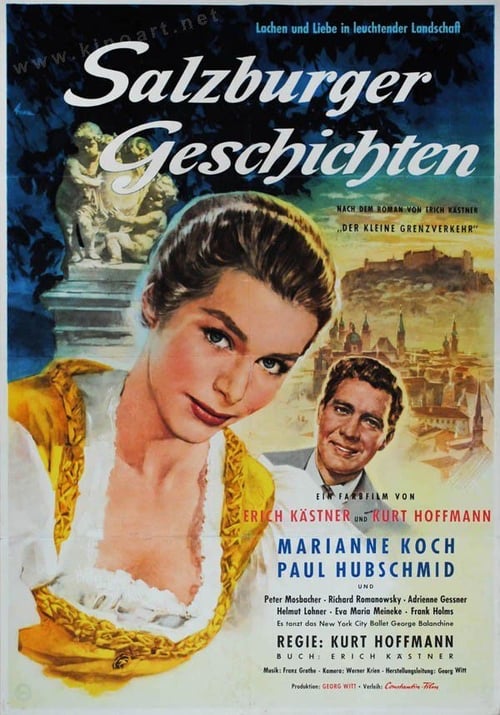
A wealthy citizen of Salzburg wants to write a play about ordinary people.
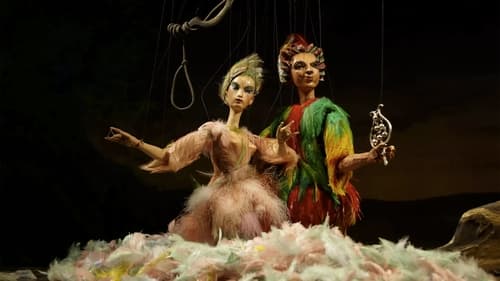
The Queen of the Night has begged Prince Tamino to free her daughter Pamina from the clutches of the High Priest Sarastro, who has abducted her. Together with the bird-catcher Papageno, Tamino enters Sarastro's realm to seek her. When he finds her, the two fall in love, but they have to have to undergo ordeals before they can be together. At the end, Papageno is also rewarded with his Papagena.
Wolfgang Amadeus Mozart's "Abduction from the Seraglio" is a famous spectacle that is enigmatic and exotic at the same time - and just because of this it is not only perfect for the fantastic stage sets of the marionette theatre, but for Ustinov's winking presentation as well. Already in 1782 the Vienna audience was enchanted by the lyrical drama by which the new inhabitant Mozart presented himself as master of opera to the audience of the imperial city. On the one hand, "The Abduction of the Seraglio" is a subtle comedy, on the other hand it conveys important humanitarian values: the Europeans captured in an Ottoman palace are not saved by a military attack but by the generosity of the sovereign "Selim Bassa" - actually mortal enemy of the Habsburg monarchy which was at war with Turkey in Mozart's time!
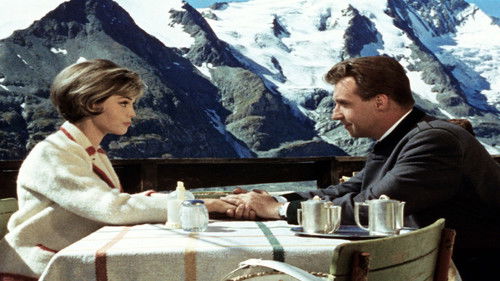
The actors Heinz Doll, Hans Stiegler and Werner Mack have failed to look after the end of the last season in time for a new commitment and are now unemployed. Since they are just right that the Salzburg mountain hotel "Zum Blaue Enzian" staff looking for.
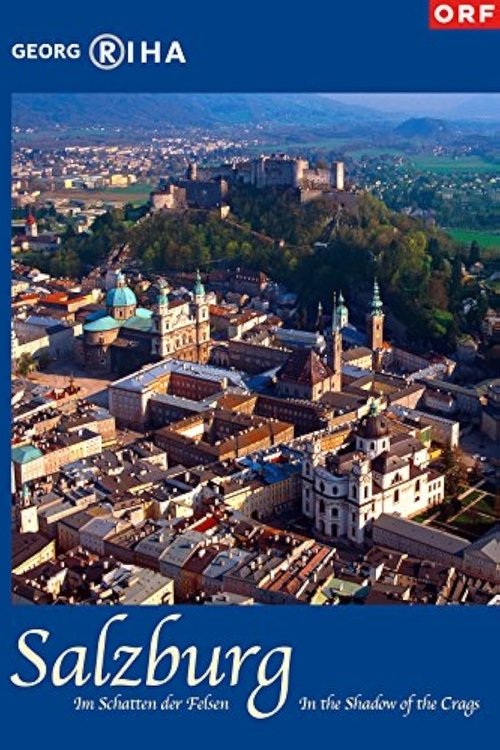
An ancient fortress, a historic centre of true baroque, the venue of a legendary stage festival - this is the Salzburg familiar to everyone. But Georg Riha's documentary presents Mozart's city from perspectives never seen before.Unshackled by space and time the viewer enters upon a unique filmic foray into one of the world's most popular cultural centres, discovering the still unknown and hidden beauties of this fascinating city off the beaten tourist tracks.
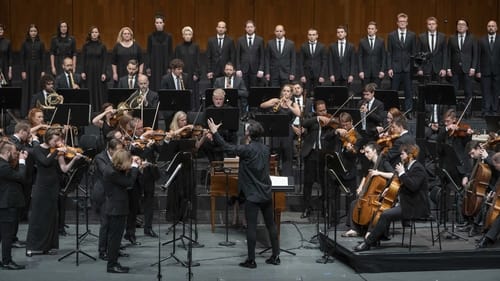
At the Salzburg Festival 2021, the musicAeterna Orchestra conducted by Teodor Currentzis performed the last symphonies of Wolfgang Amadeus Mozart – No. 40 K. 550 and No. 41 K. 551 Jupiter. The two pinnacles of Mozart’s symphonic heritage are interconnected: the classic wrote symphonies No. 39–41 in one short period of just a few fruitful weeks in 1788. In the concert the two symphonies – the two sides of Mozart’s unfathomable genius – are joined by works that are close to them both in spirit and the time of creation: the orchestral Masonic Funeral Music in C minor, the recitative and aria of Donna Anna from the finale of the opera Don Giovanni and the chorus from the spiritual cantata Davide penitente created in 1785.
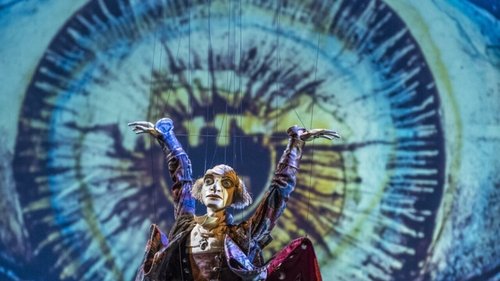
In Luther's beer-cellar, lusty singing extols the virtues of beer and wine. For this evening, the Muse decides to deflect the poet Hoffmann's attention from amorous escapades, so that he will devote himself entirely to his art. Hoffmann tells of the three unhappy loves of his life: Olympia, Antonia and Giulietta.
With the opera "Le nozze di Figaro" commenced the remarkably successful cooperation between Mozart and his librettist Lorenzo da Ponte. The first night of "Figaro", presumably Mozart's most perfect musical comedy, was held in Vienna on May 1st, 1786. It is based on Beumarchais' "scandalous" comedy "La Folle Journée ou Le Mariage de Figaro" which, after its first staging in the pre-revolutionary Paris of 1784, soon became a huge success throughout Europe. For the opera, the revolutionary content of the intricate comedy of love and conspiracy against the background of noble capriciousness was actually toned down but not completely abandoned. The extensive ensemble scenes, the treatment of the orchestra and the delicately nuanced musical profiles of the characters hit the target and, looking back, proved to be pioneering for following generations of musicians.
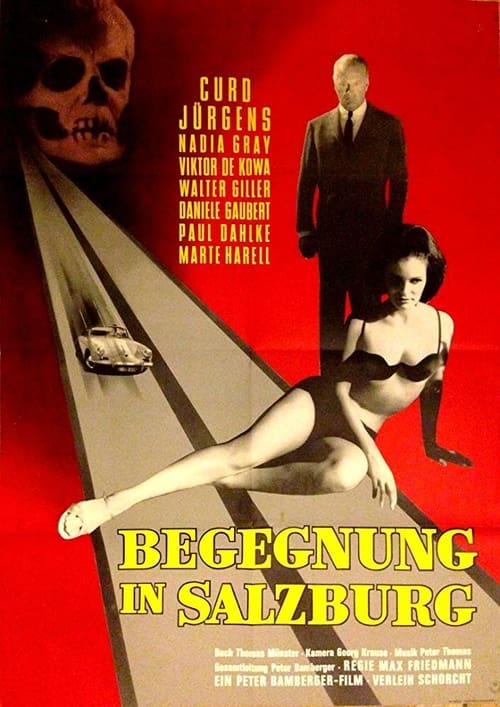
No description available for this movie.
A documentary about how the Salzburger Festspiele came to be and evolved almost 100 years ago.
Sepp Holzer explains some of the innovative, labour-saving agricultural techniques he applies at his farm in the Eastern Alps of Salzburg, Austria.
Don Giovanni, opera in two acts by Wolfgang Amadeus Mozart (Italian libretto by Lorenzo da Ponte) that premiered at the original National Theatre in Prague on October 29, 1787. The opera’s subject is Don Juan, the notorious libertine of fiction, and his eventual descent into hell. For Mozart, it was an unusually intense work, and it was not entirely understood in his own time. Within a generation, however, it was recognized as one of the greatest of all operas. Presented by the Salzburg Marionette Theatre with narration provided by Sir Peter Ustinov.
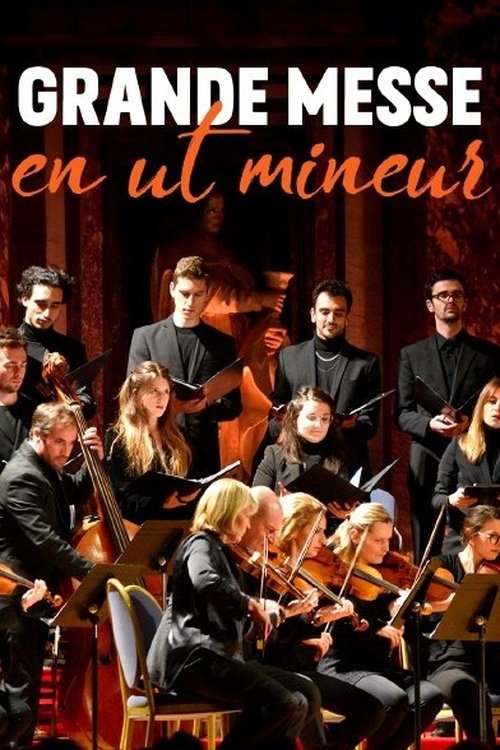
Composed in 1782, the Great Mass in C minor, KV 427, ranks among the pinnacles of Western sacred music. Gianluca Capuano conducts this masterpiece with the vocal ensemble Il Canto di Orfeo and Les Musiciens du Prince, a Monegasque ensemble playing period instruments.
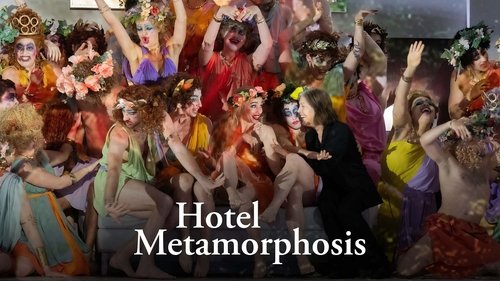
When Ovid's “Metamorphoses” meet Vivaldi's music: conceived and directed by Barrie Kosky, an effervescent show presented at the 2025 Salzburg Festival. With Cecilia Bartoli, Lea Desandre, Nadezhda Karyazina, and Philippe Jaroussky, as well as actress Angela Winkler in the spoken role of Orpheus.
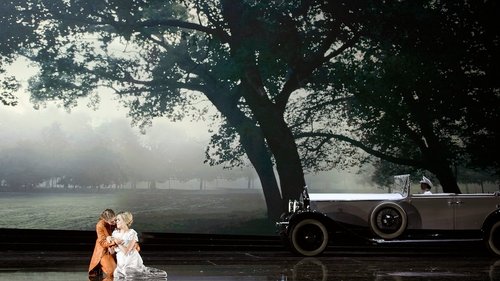
With their “comedy for music” in the spirit of Mozart, Richard Strauss and his inspired librettist Hugo von Hofmannsthal created the most popular of all their works and one of the most frequently performed operas of all time. In the guise of a gossamer-light and supremely entertaining high-class comedy, Der Rosenkavalier touches on universal themes such as love, sex, marital fidelity and the changes that human relations undergo over time – and all of it set to music of the most glorious kind imaginable. With its stellar cast under the inspired direction of Harry Kupfer, the 2014 Salzburg Festival’s production of Der Rosenkavalier was one of the most internationally acclaimed interpretations of the work since the start of the new millennium. “A musical feast from beginning to end“ (Wiener Zeitung).
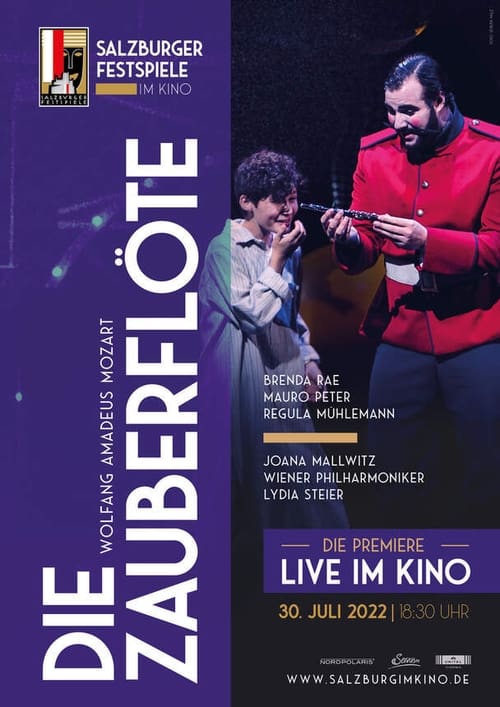
A spectacular chase between the prince and the monster opens the scene, featuring a love story with a kidnapped princess, two warring antagonists—the Queen of the Night and Sarastro—, "funny characters" like Papageno and Papagena, and, last but not least, the magical instruments of flute and glockenspiel... The enchanting music and fairytale motifs make "The Magic Flute" the perfect introduction to the world of opera for young and old.
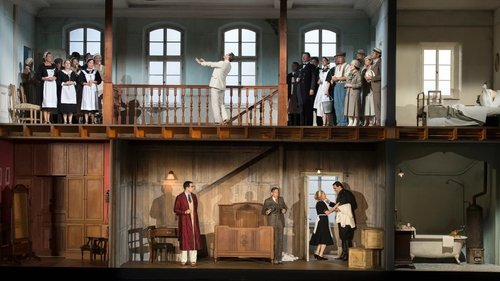
The Salzburg Festival presents one of Wolfgang Amadeus Mozart's masterpieces: the opera Le Nozze di Figaro, in a new production staged by Sven-Eric Bechtolf and conducted by Dan Ettinger. Set-List: Wolfgang Amadeus Mozart, Le nozze di Figaro, K. 492.
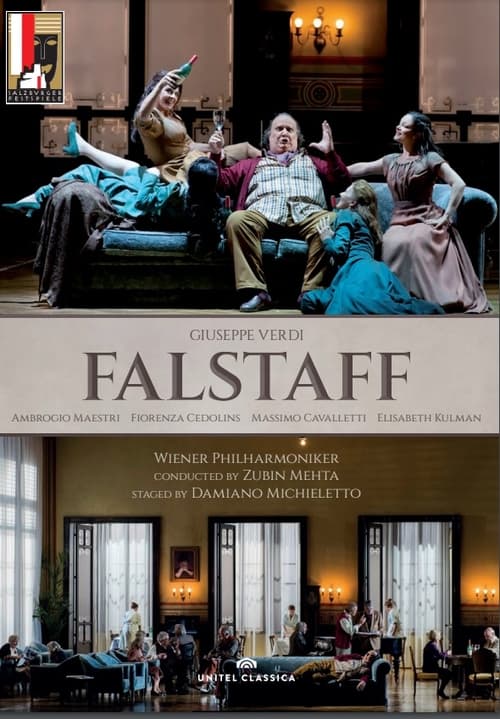
This 2013 Salzburg Festival performance of Falstaff, Giuseppe Verdis late masterwork and crowning achievement, features conductor Zubin Mehta and the Vienna Philharmonic. The staging thought up by Italian director Damiano Michieletto moves the action from a fictitious London to that special care home, the Casa Verdi, a place rich in memories of great days past and impressions of a real-time present. Ambrogio Maestri seems a tailor-made Falstaff. His physique is just right for the part, as are his powerful voice, flair for drama and feeling for the Verdi style. (New York Times)
In the years before World War II, a tomboyish postulant at an Austrian abbey is hired as a governess in the home of a widowed naval captain with seven children, and brings a new love of life and music into the home.
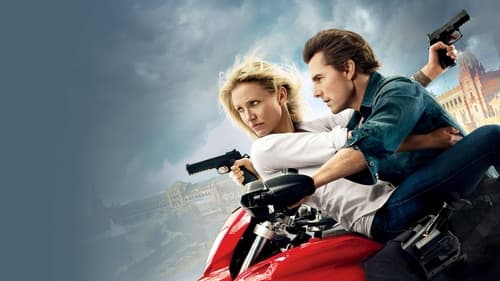
A fugitive couple goes on a glamorous and sometimes deadly adventure where nothing and no one – even themselves – are what they seem. Amid shifting alliances and unexpected betrayals, they race across the globe, with their survival ultimately hinging on the battle of truth vs. trust.
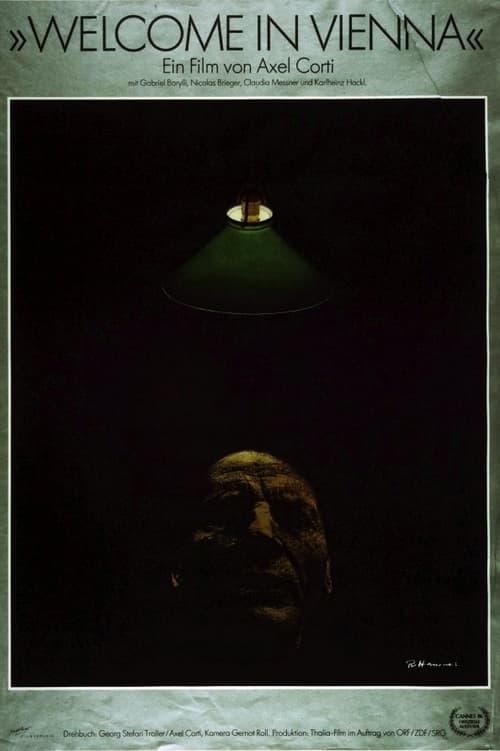
Freddy, a Viennese Jew who emigrated to New York after Hitler's invasion, and Adler, a left-wing intellectual originally from Berlin, return to Austria in 1944 as soldiers in the U.S. Army. Freddy falls in love with the daughter of a Nazi, and Adler attempts to go over to the Communist Zone. But with the advent of the Cold War and continuing anti-semitism, the idealism of both characters is shattered as they find themselves surrounded by cynicism, opportunism, and universal self-deception.
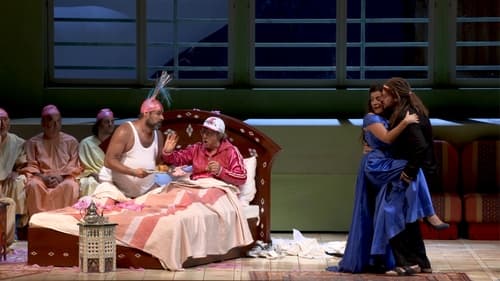
Isabella is a strong, independent woman who has no intention of giving in to the clumsy advances of the powerful Mustafà. In the production by BAFTA winners Mosh Leiser and Patrice Caurier, which plays with prejudices about clashing cultures, Mustafà is no longer an Ottoman bey, but a shady gangster who traffics electronic goods in the port of Algiers.
When 13-year-old Lena tragically loses her mother, she must be strong and care for the newborn. Her father is no help. His grief for his deceased wife has a firm grip on him. Only when he hears about a parasitic fungus that enables communication with the dead does he regain his courage. Lena can't make sense of it. She believes the whole thing is pure fantasy. But then she begins to have visions that make it almost impossible for her to distinguish between reality and illusion.
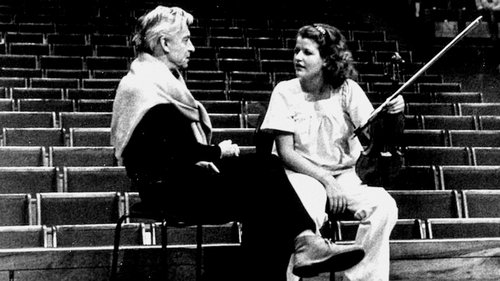
An account of the life and work of controversial German orchestra conductor Herbert von Karajan (1908-89), celebrated as one of the greatest musicians of the twentieth century.
Over twenty-five years after his death in July 1989, the controversial Austrian conductor Herbert von Karajan remains an enigma. He was the most successful conductor in the history of classical music. Many of his recordings - of Italian opera, of Wagner and Richard Strauss, of Sibelius, Beethoven and Brahms - are treasured by music lovers around the world. Yet, even at the peak of his fame, his performances were variously criticised for being too opulent, too manicured, lacking warmth or spiritual depth. This musical profile explores the many paradoxes in the life and music of this controversial figure, who forged his international reputation in London with the Philharmonia Orchestra shortly after the end of the Second World War and went on to reign supreme in the classical music world during his three decades with the Berlin Philharmonic. The film also examines Karajan's belief in the visual power of music, and his determination to leave behind a substantial legacy of music on film.
Documentary short covering his rise to fame and early death.
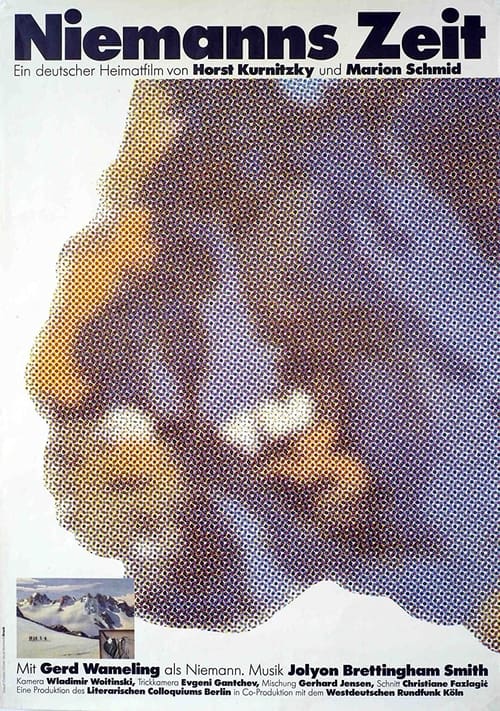
A lone scholar researches the visual and textual worlds of National Socialism. The film approaches a critical understanding of "German identity" from a multimedia perspective - off-screen commentary is superimposed over shots of paintings, literary quotations over feature film sequences and at the center of the film is a television debate on the subject of nature. The focus is on the German concept of "Heimat" and its connection to romantic notions of nature.
No description available for this movie.
No description available for this movie.
The president of the United States declares a state of emergency after a deadly virus developed as a bio-weapon is accidentally released across the globe.
Two overworked and underpaid assistants come up with a plan to get their bosses off their backs by setting them up with each other.

In New York City for their annual tradition of Christmas Eve debauchery, three lifelong best friends set out to find the Holy Grail of Christmas parties since their yearly reunion might be coming to an end.
When their father passes away, four grown, world-weary siblings return to their childhood home and are requested -- with an admonition -- to stay there together for a week, along with their free-speaking mother and a collection of spouses, exes and might-have-beens. As the brothers and sisters re-examine their shared history and the status of each tattered relationship among those who know and love them best, they reconnect in hysterically funny and emotionally significant ways.
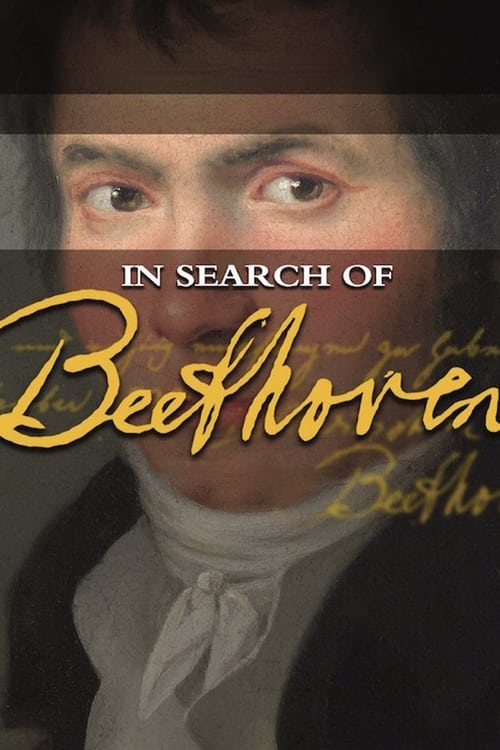
In Search of Beethoven offers a comprehensive documentary about the life and works of the great composer. Over 65 performances by the world's finest musicians were recorded and 100 interviews conducted in the making of this beautifully crafted film. Eleven interviews are included in the Extras and Six complete movements.
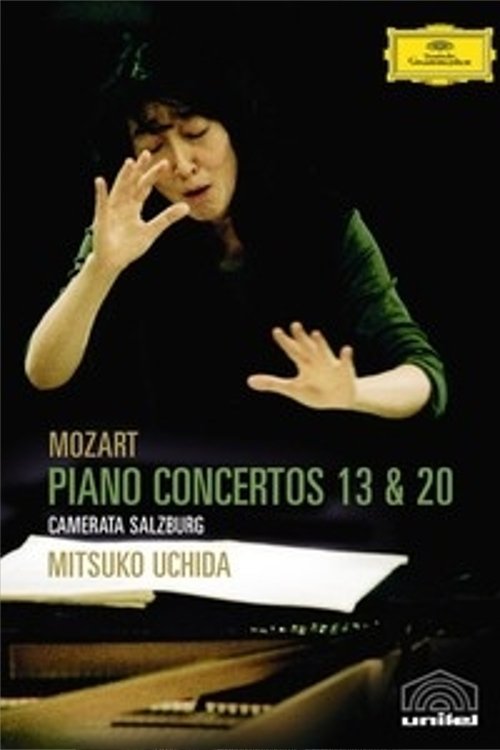
Either as director and pianist, or when combining the roles, Uchida lives every note, and the contribution from the orchestra is a vital one, not least from characterful woodwinds and with horns, trumpets and timpani adding a distinctive presence. Uchida's pianistic clarity and incision, and her unforced identification with the music, equates to the sort of playing that makes one listen to seemingly familiar music with fresh ears and to appreciate how an artist, even one as individual as Uchida, can search music but not dominate it . . . With crisp, well-balanced sound . . . this is a recommendable release
No description available for this movie.
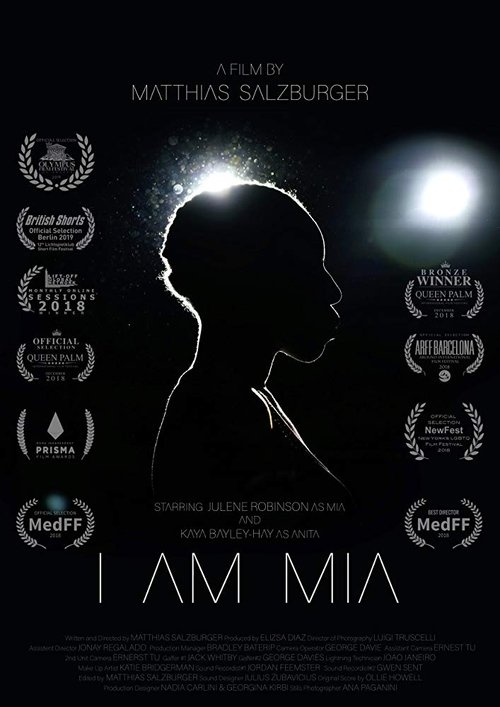
A boxer struggles to stay focused on her next fight after shocking the world with news that she's trans.
During their journey to prison, a tortured detective has to choose between bringing in his brother for a crime he actually committed, or offering yet another chance.

Set in the nightmarish surroundings of Venice, Chloe, a young single mother, fights for the custody of her son Sammy after losing her home due to an assault offense she committed.

At the Salzburg Festival 2024, the Mozarteum Orchestra conducted by the Spanish maestro Roberto Gonzalez-Monjas presented a morning dedicated to Mozart by the American soprano Emily Pogorelc.