
Action
Adventure
Animation
Comedy
Crime
Documentary
Drama
Family
Fantasy
History
Horror
Music
Mystery
Romance
Science Fiction
Thriller
War
Western
Found 23 movies, 0 TV shows, and 0 people
Can't find what you're looking for?
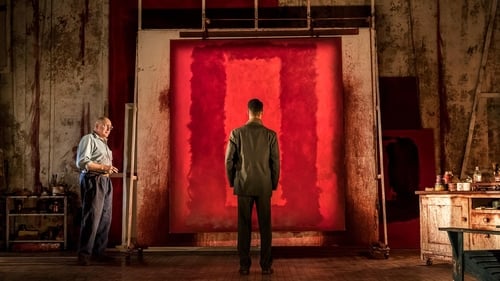
Under the watchful gaze of his young assistant, the artist Mark Rothko takes on his greatest challenge yet: to create a definitive series of paintings for the Philip Johnson-designed Four Seasons restaurant in architect Mies van der Rohe’s iconic Seagram Building. Award-winning stage and screen actor Alfred Molina reprises his critically acclaimed performance as the American abstract expressionist painter Mark Rothko in playwright John Logan’s Tony Award-winning 2010 play Red. Molina is joined by rising star Alfred Enoch (How to Get Away With Murder) as Rothko’s assistant Ken. Original Broadway director Michael Grandage returns to direct this 2018 West End revival, the first U.K. production since the play’s 2009 world premiere at the Donmar Warehouse.
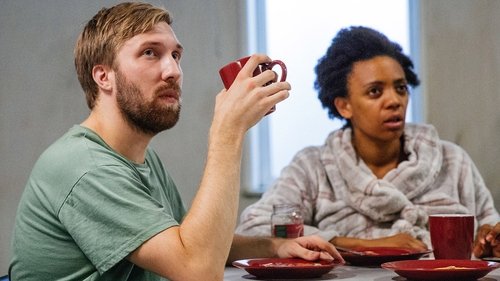
In the communal area of a block of temporary accommodation, the residents go about their day-to-day routines in the run-up to Christmas. The bonds of love that keep people together are put to the test.
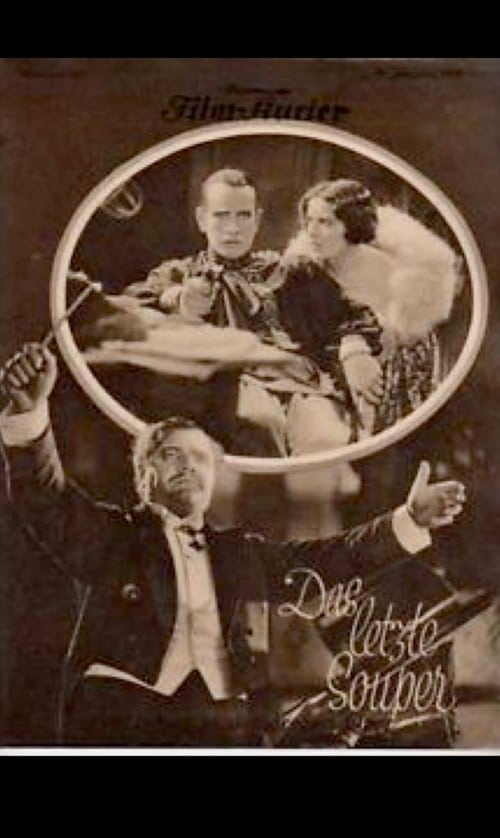
The impressive cast is headed by the great Heinrich George as Boris Stroganoff, an opera composer and conductor who’s also a notorious lothario. Albani is ballet dancer Viola Suroff, who’s put her career aside to look after her partner Maxim Sadi, a baritone with unspecified health issues that have kept him off stage. Stroganoff sets his sights on Viola and offers her a job in the corps de ballet for his new opera The Boyar, which she accepts provided Maxim is also hired. However, dancer Margot (called Myrra in the French version) maintains a seething passion for Stroganoff, as does Countess Geschow (called Countess Ziska on this print), both of whom are resentful when watching his interactions with Viola. Jealousies run high on opening night between all the characters and Stroganoff is shot mid-performance, but who is the killer: Maxim, Margot, or Geschow?I

On June 8, 2024, Oscar-winning French actress Marion Cotillard joined the Berlin Philharmonic Orchestra for a performance of Arthur Honegger’s oratorio Jeanne d'Arc au Bûcher (Joan of Arc at the Stake), conducted by Alan Gilbert, performed at the Berliner Philharmonie in Berlin, Germany and broadcast live on Digital Concert Hall, the online concert hall of the Berliner Philharmonie. In the oratorio, Joan of Arc looks back on her life, her visions, and her successes during a show trial in which she is sentenced to be burned at the stake.

A look back at "La Cage aux Folles", which ran non-stop for five years, from February 1973, on the stage of the Théâtre du Palais Royal in Paris. At a time when homosexuality was considered a crime by the law, Poiret and Serrault achieved great success in boulevard theater. Their success continued on the silver screen, with three Oscar nominations and a Broadway musical. Combining never-before-seen archives from the play, extracts from the film, confessions by Poiret and Serrault, and interviews with witnesses, this is the story of a wild epic.

No description available for this movie.
Dancing through Slovak history of the twentieth century. Based on the Theatre du Campagnol performance "Le Bal" by Jean-Claude Penchenat, written by M. Huba and M. Porubjak. A dance locale - a place where people who are looking for partners come together. Lonely individuals become couples, people who were strangers not so long ago become partners and lovers. Outside, conditions change and regimes change, the country is overwhelmed by great history, the whirlwind of the World War, the communist coup, the hopeful spring of 1968, the fraternal occupation, the Hussite normalisation, November 1989 and the collapse of Czechoslovakia. Only those lonely dancers on the dance floor remain the same - with their human longings, their ridiculousness and their unfulfilled dreams.
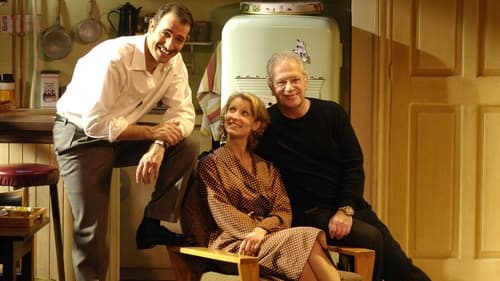
Jerry Ryan, a lawyer, is devastated after his divorce. Desiring to make a change in his life, Jerry moves to New York in the hopes that it will be good for him. Jerry's life takes a different turn when he meets Clara Mosca, a free-spirited woman in New York.
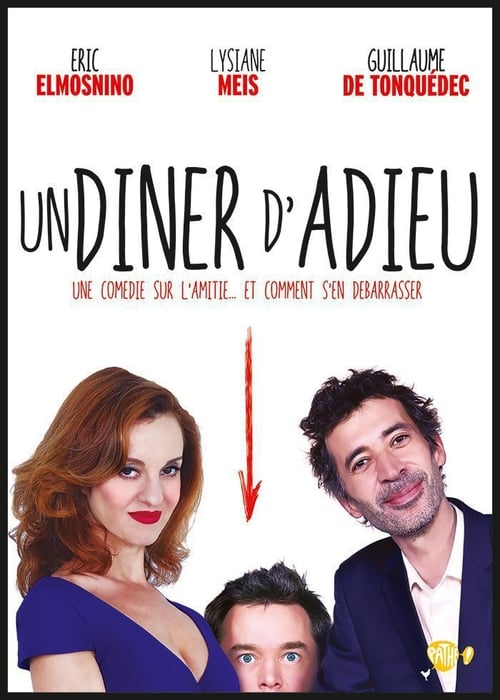
Why do we often go to dinners we don't want to attend, to see friends who aren't really friends anymore? Out of habit? Out of kindness? Out of cowardice? Intoxicated by the idea of tidying up their schedules by sorting through their old friends, Pierre and Clotilde Lecoeur (played by ERIC ELMOSNINO and LYSIANE MEIS) decide to organize farewell dinners, the ultimate form of friendly divorce. However, by choosing - as their first victim - Antoine Royer (played by GUILLAUME DE TONQUÉDEC), their oldest friend, Pierre and Clotilde are unaware that they are getting caught up in a downward spiral.
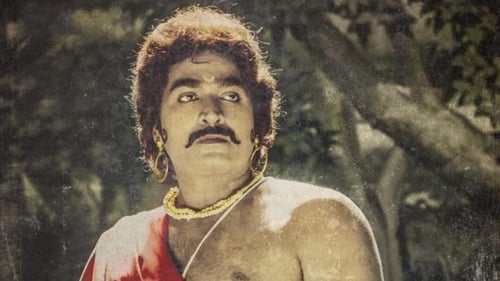
A veteran theatre artist who lives for his art 'enters' the world of films. Can the film industry hold on to his inimitable artistry?
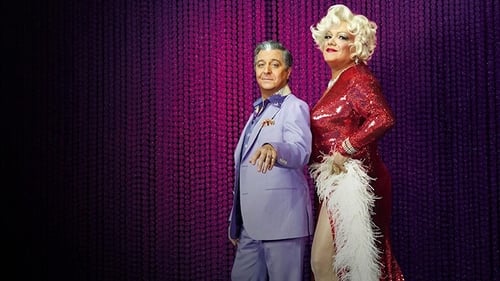
"La Cage aux Folles" is a club which has a transvestite show, starring Zaza (whose real name Albin). It forms Renato old homosexual couple. The latter was previously a son, Laurent, who announces his future marriage with the daughter of a deputy. The meeting with the conservative politician is unavoidable ...
A classic comedy about long-planned courtship and the fear of getting married once and for all performed by actors from Prague's Divadlo Na Jezerce theater.
From Adam to the Three Kings is the subtitle of the dance comedy Slovak Christmas with SĽUK. A traditional opus as a comedy about the creation of the world and what came after.
Taken from the Radošino Naive Theatre. Ján Melkovič played here the character of the composer Ján Petrović-self. Stanislav Štepka wrote this exceptional play for him as a gift for his 50th birthday.
A theater director and a young director await an actress’s decision on a role, triggering a scathing critique of how TV’s degraded practices and commercial pressures marginalize true artistry. Through the director’s expansive monologue, inspired by Juraj Kukura’s ethos, he reflects on his life in culture, his convictions about theater, colleagues, and the survival of artistic integrity in today’s climate.
No description available for this movie.

Shakespeare's tragicomedy about the banality of love, pride and war performed by DJP in Trnava... Troilus and Cressida is a tragicomic play in which Shakespeare cynically portrays the fates of legendary Greek and Trojan heroes, but also the story of one destroyed love, and especially the image of a useless war. A pseudo-historical fresco that has perhaps never been more topical in the domestic socio-political context. What does a Trojan War look like in which the greatest icons of ancient Greece do not want to fight? A kidnapped Helen as a ridiculous pretext; a sulking and proud Achilles wallowing in a tent and refusing to fight; men who rely more on bickering backstage politics than on concrete deeds; pandering, revenge and, as befits a proper Shakespeare, blood and death.
Written in 1865, Alice's Adventures in Wonderland was a popular success. All British schoolchildren and their parents knew about the escapades of the young Alice. With a new score by Philip Glass, a figurehead of American minimalism, choreographers Amir Hosseinpour and Jonathan Lunn reimagine and reinvent Lewis Carroll's fantastical world. Freed from the original narrative, the dancers of the OnR Ballet play a new gallery of contemporary creatures and characters, joined by actress Sunnyi Melles.
T. Dianiška's documentary fiction from behind the scenes of the assassination of R. Heydrich, in which the real story is intertwined with comic exaggeration, pop culture references, and harsh humor. 294 Brave Men was written by Tomáš Dianiška for the Divadlo po Palmovkou theater, where he also staged it with the local ensemble. As the title of the play suggests, the protagonists of Operation Anthropoid are not the main heroes in this case. 294 Brave Men refers to the people from the domestic resistance who paid with their lives for helping the paratroopers and whose names are now borne by streets in Libeň and the surrounding Prague districts. T. Dianiška treats historical facts with respect, but at the same time quite freely, and he depicts the background of "the greatest heroic deed in our history" with the help of humor, often very dark humor.
More than ten years have passed since the famous premiere of the equally famous drama Maryša by the Mrštík brothers at the Husa na provázku Theater in Brno. Vladimír Morávek's new staging provoked a number of enthusiastic responses as well as great indignation. He subsequently left for the theater in Hradec Králové to launch a great era of drama, which he crowned with a return to the scene of the crime – Brno.
Smetana's penultimate opera premiered on September 18, 1878, at the New Czech Theater. At the National Theater itself, it was staged in the 20th century, for example, from 1980 and 1983, respectively. The 2006 production in the second courtyard of the Litomyšl Castle, which was filmed by Czech Television, is characterized by a minimalist set with an imaginative neon silhouette of Bezděz Castle, as well as the fact that, with two exceptions, all the singers were performing their roles for the first time. Tenor Pavel Černoch, who at that time still had his international career ahead of him, excelled in the role of Vít... Since its creation, The Secret has been considered Smetana's most perfect and mature opera. Even the overture is a remarkably composed and superbly constructed masterpiece. After this successful premiere in Litomyšl, the performance became part of the repertoire of the National Theater.
Higgins, a professor of phonetics, makes a bet that he will transform a child of the street - a poor flower seller named Lisa - into a real lady. However, a seemingly innocent game of male whimsy becomes a dangerous gamble with a woman's identity and personality...

The most popular Czech comic opera, with a libretto by Karel Sabina, marking the 200th anniversary of the birth of Bedřich Smetana, in the current production of the National Theater in Prague. For more than 150 years, The Bartered Bride has dominated Czech opera. No one else, not even Smetana himself, has managed to surpass its popularity, which over the years has become part of our national DNA, so to speak. At the time of its creation in the 1860s, however, The Bartered Bride was actually quite a bold experiment – Bedřich Smetana and librettist Karel Sabina masterfully mocked all those who imagined "national opera" as an idyllic picture of the Czech countryside, where national virtues reign supreme.