
Action
Adventure
Animation
Comedy
Crime
Documentary
Drama
Family
Fantasy
History
Horror
Music
Mystery
Romance
Science Fiction
Thriller
War
Western
Found 51 movies, 9 TV shows, and 20 people
Can't find what you're looking for?
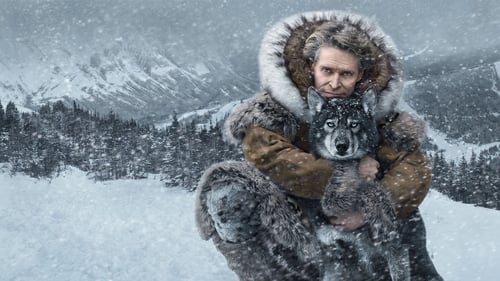
The untold true story set in the winter of 1925 that takes you across the treacherous terrain of the Alaskan tundra for an exhilarating and uplifting adventure that will test the strength, courage and determination of one man, Leonhard Seppala, and his lead sled dog, Togo.
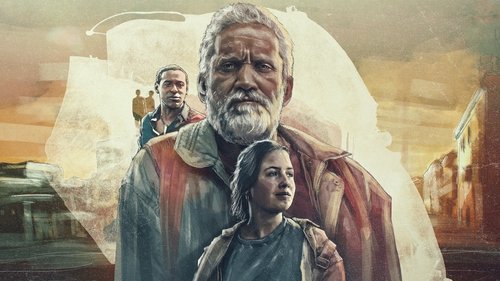
Togo just wants to watch his neighbors' homes, wash their cars and clean up their sidewalks. But the drug traffickers want more from him.

Original video film.

Following in the footsteps of the Hamburg film director Hans Schomburgk who travelled through the German colony of Togo from Lomé to the north with his companion and actress Meg Gehrts in 1913, Jürgen Ellinghaus screens the footage shot then at its locations in modern-day Togo. Schomburgk’s affirmative images show slave labour, humiliation and the arrogance of the colonial power. The material is contrasted by Gehrts’ romanticising diary entries and other colonial reports which often testify to a horrifying coldness.
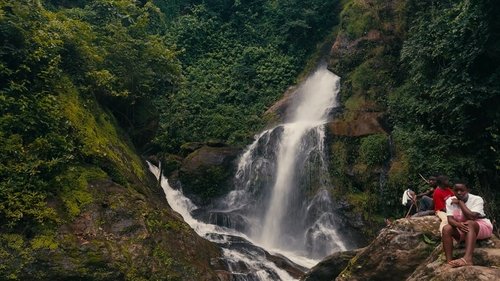
Six Scouts and Guides from France are heading to Togo, where they are joining forces with Togolese scouts to build a classroom. This documentary captures their human adventure and the cultural exchange that emerges at the heart of this solidarity project. Through the challenges of construction, a story of friendship, cooperation, and discovery unfolds between young people from two continents.
No description available for this movie.
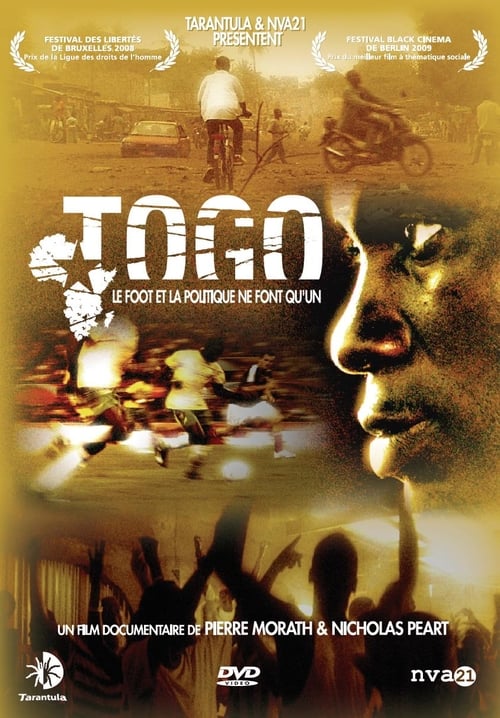
October 8, 2005. Togo, one of Africa's poorest countries, qualifies for the World Cup for the first time in its history. The achievement is not only historic; it also hastens the end of the bloody civil war that has been ravaging the country for several months. On the eve of the World Cup opening in Germany, hopes are high in Lomé, the capital of Togo, that the national team will restore pride and prosperity to an entire people. However, disillusionment quickly sets in. The team had not even entered the competition when it was already beset by endless internal problems. What if soccer, in the end, was nothing more than a reflection of the deep-seated problems that have been plaguing Africa for years?

From 1884 to 1914, a small belt of land between the British Gold Coast Colony and French-governed Dahomey was part of the German overseas empire in Africa. "Togoland", the later Togo and the eastern part of today's Ghana, experienced the first German capitulation in the early days of WWI. European rule left its marks on people's minds, even more than a century after the forced pull-out of one of the major European players in the competitive "great colonial game" and more than half a century after the African Independences. Lomé - Adibo - Yendi - Kamina - Wahala: present-day glimpses of a journey into the past.
A young German engineer is invited to Togo by the family of a West African student living in Germany. Here he observes the problems of the young state of Togo.
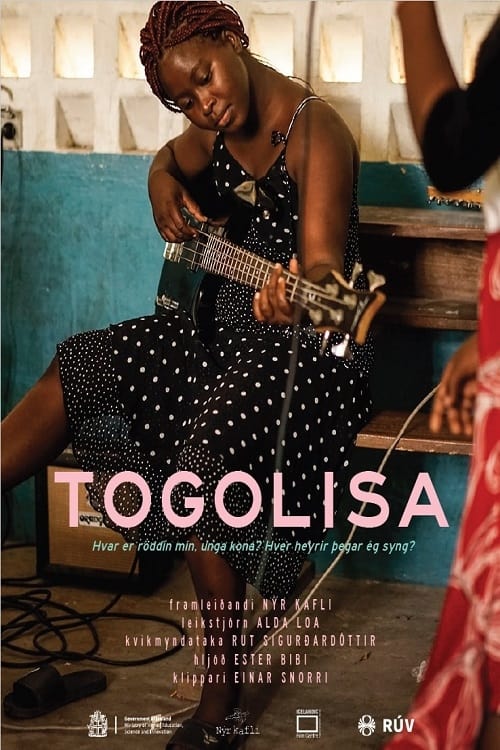
Each fall, 50 girls meet up at rock camp in Togo. They play and sing gospel music, which they know from church, and dance to African rap and pop. A five-day rock camp with teenage girls who still dream.
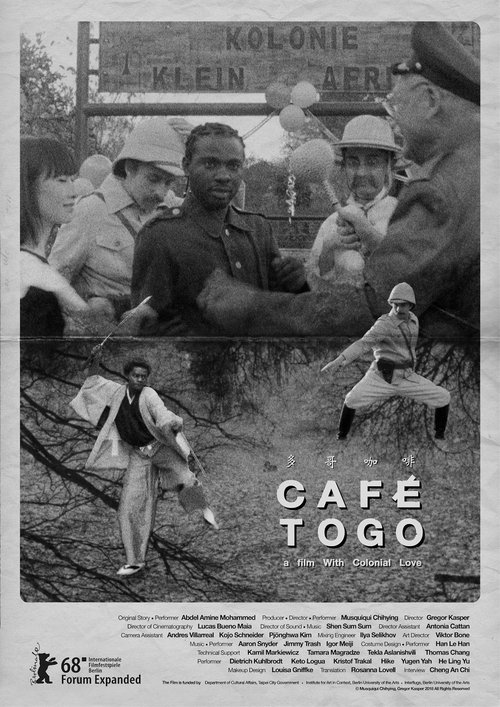
CAFÉ TOGO looks at the efforts to change street names with colonial connotations in the so-called Afrikanisches Viertel (African Quarter) in Berlin-Wedding. According to Berlin’s street law, every street named after a person honors that person. Petersallee, Lüderitzstraße, and Nachtigalplatz bear the names of persons whose biographies are tainted by the blood of the victims of German colonialism. According to the law, streets that do not correspond to today’s understanding of democracy and human rights should be renamed.
A German politican visits German colony Togo.

Major communal ceremonies for purification, exaltation of the forces of life and deliverance from hostile powers marking the very intense religious life of the Kabre, a mountain people in northern Togo.
In Togo among Kabye people, trials by fire ordeal happen among truth masters in order to settle witchcraft cases which cannot be judged by usual men. This film shows two cases.
This ethnographic film is dedicated to the rituals and ceremonies of Gorovodu religion in West Africa. A medicine and healing sect practiced by Ewe peoples in Ghana and Togo, Gorovodu is embedded in every day life. Through visual explorations of ritual drumming and spirit possession, this film offers a guide to the complexity and humanity of religion in West Africa.

After an accusation of a breach of diplomacy committed by his brother, Hashimura Togo bears the burden and leaves Japan in disgrace for the United States where he enters the employ of Mrs. Reynolds as a butler. Togo discovers that Mrs. Reynolds' daughter Corinne is in love with Dr. Garland but is being coerced into marrying Carlos Anthony who, having seized all of her deceased father's funds, now promises to save the family from financial ruin in return for Corinne's hand in marriage. Enlisting the aid of a reporter, Hashimura succeeds in proving Anthony's deception in time to stop the marriage, freeing Corinne to marry Garland. After a series of misadventures, his name is cleared and Hashimura returns to his sweetheart in Japan.

In October of 1994 three student filmmakers disappeared in the woods near Burkittsville, Maryland, while shooting a documentary. A year later their footage was found.
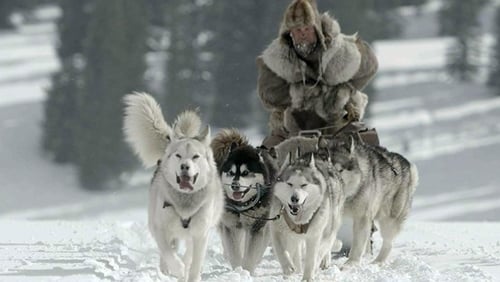
In 1925, a group of brave mushers travel 700 miles to save the small children of Nome, Alaska from a deadly epidemic.

1989. A young garbage truck driver and musician Roma, far from the ideals of virtue, finds a carpet with mystical properties that takes him to the future so that he can correct the mistakes of the past.

The Mamleev family portrait, set in the cramped interior of a small Moscow flat, is an experiment in metaphysical documentary making. Yury Mamleev, the great writer of the Russian chthonic, plays with a cat while his wife, the translator Maria Mamleeva, flips through a photo album from their émigré years in Paris and America. But something eerie seeps into these scenes of simple comfort, vaguely manifesting itself in the elliptical editing and the soundtrack’s unsettling, abstract humming.

When Lena and Ulli start the engine of their old Land Rover, Lady Terés, they have a plan: to drive from Hamburg to South Africa in six months. What they don't know yet is that they won't ever get there. Two totally different characters, jammed together in two square meters of space for almost two years, they experience what it really means to travel: leaving your comfort zone for good.
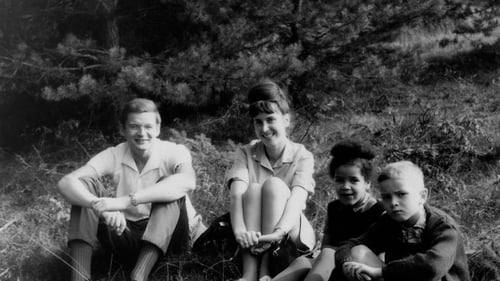
In the 1960s, a white couple living in East Germany tells their dark-skinned child that her skin color is merely a coincidence. As a teenager, she accidentally discovers the truth. Years before, a group of African men came to study in a village nearby. Sigrid, an East German woman, fell in love with Lucien from Togo and became pregnant. But she was already married to Armin. The child is Togolese-East German filmmaker Ines Johnson-Spain. In interviews with Armin and others from her childhood years, she tracks the astonishing strategies of denial her parents, striving for normality, developed following her birth. What sounds like fieldwork about social dislocation becomes an autobiographical essay film and a reflection on themes such as identity, social norms and family ties, viewed from a very personal perspective.
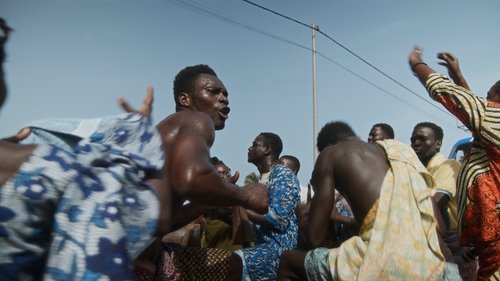
Voodoo tradition is too often victim of misperceptions and stereotypes in the Western imagination. In Togo, Voodoo is revealed in all its splendour and complexity. Through spectacular ceremonies, consultations and rites, an intimate connection is revealed that unites the visible world with that of invisible forces. By giving a voice to those who live and practise Voodoo, an authentic and nuanced perspective emerges, revealing the richness of this mysterious spirituality. It's a genuine burst of curiosity about a living heritage and the sumptuousness of its traditions.
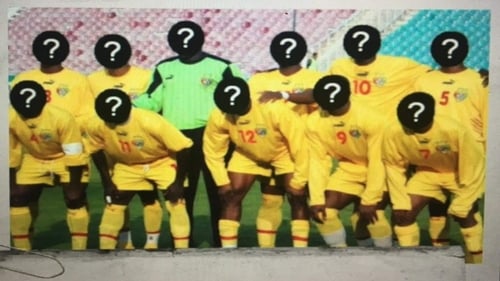
A friendly football match between Bahrein and Togo in 2010, turns out to be rigged, as the team representing Togo is a fake team set up by international gamblers. The bad guys turn out to be victims, the good guy is revealed as the international gambling criminal while the top crooks stay out of sight since they have the power to determine who’ll be convicted. A revealing peek into a hidden world.
Nana Benz is the story of the legendary queens of the West African mercer, self-made women, coming out of nowhere, building empires. These women were heroes to the people, Mercedes driver at the West African coast. They influenced the history of Togo and were witnesses of the fights for independence, the dictatorship till the globalization nowadays. Thomas Böltken manages to establish closure to the protagonists by letting their heirs - grandchildren, widows, lovers - speak.

A young woman turns to Holmes for protection when she's menaced by an escaped killer seeking missing treasure. However, when the woman is kidnapped, Holmes and Watson must penetrate the city's criminal underworld to find her.

A comedy about small-town politics in 1949.
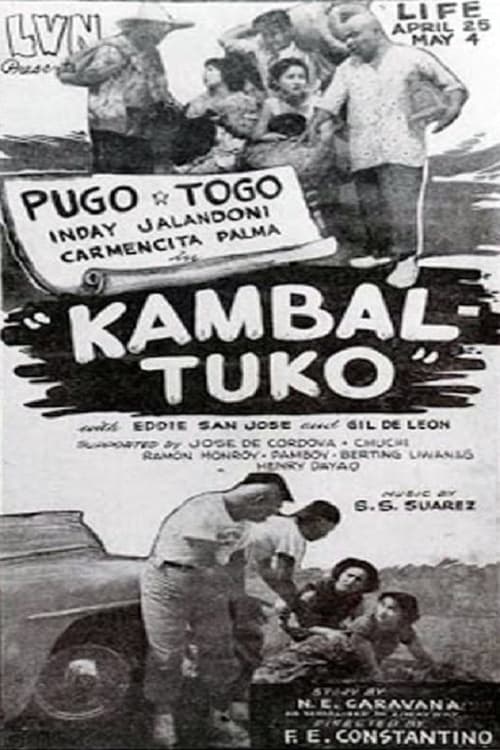
Kambal Tuko is undoubtedly one of Pugo and Togo's best vehicles with the comic tandem as the conjoined twins Momoy and Popoy.
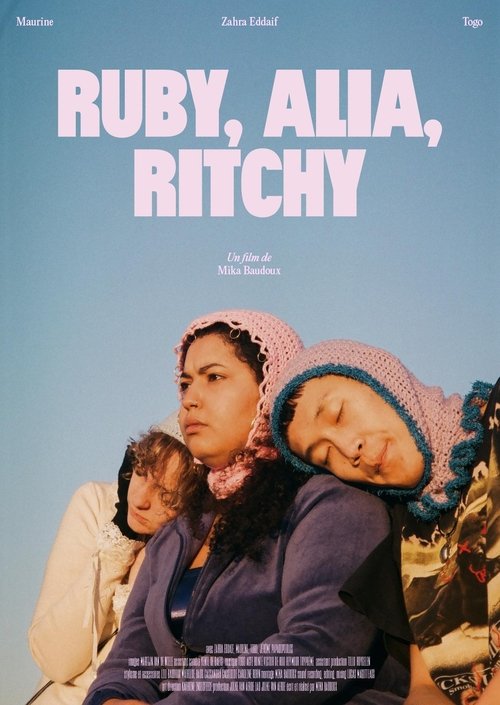
Alia shares an apartment with two friends. They spend the strange period of lockdown together, while also going through the painful process of mourning their friend's death.

A long time ago, a winged maiden was held prisoner in a castle - cursed never to experience love, lest she die. Centuries later, in a sleepy coastal town, a young girl relives this agony.

With a double performance of piano and violin and complete improvisation, TAM performed live music in the doujin shop for the first time in Melonbooks Nagoya 2 Go. Featuring music from Kanon, AIR, CLANNAD, Final Fantasy and Super Mario Bros.
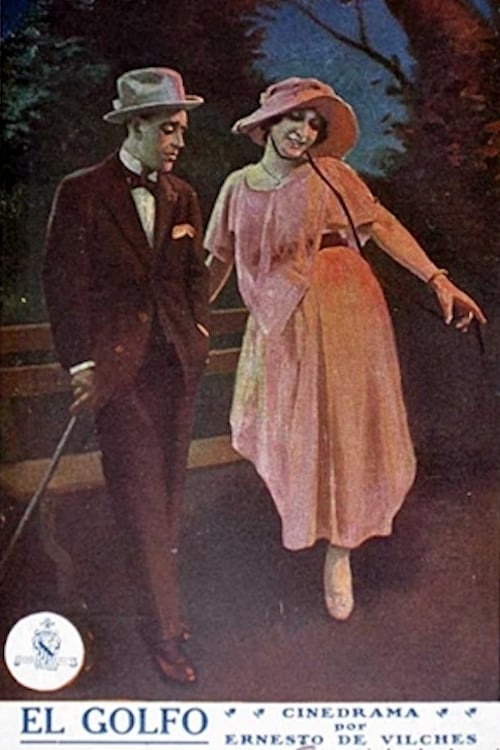
Feature film that tells the misadventures of Enrique Villar, the tramp who, through much hard work finally fights his way to win the hand of beautiful and rich heiress Irene Heredia.

The lives of three men who were childhood friends are shattered when one of them suffers a family tragedy.

Struggling to find his place in the world while juggling school and family, Brooklyn teenager Miles Morales is unexpectedly bitten by a radioactive spider and develops unfathomable powers just like the one and only Spider-Man. While wrestling with the implications of his new abilities, Miles discovers a super collider created by the madman Wilson "Kingpin" Fisk, causing others from across the Spider-Verse to be inadvertently transported to his dimension.

Nathan Algren is an American hired to instruct the Japanese army in the ways of modern warfare, which finds him learning to respect the samurai and the honorable principles that rule them. Pressed to destroy the samurai's way of life in the name of modernization and open trade, Algren decides to become an ultimate warrior himself and to fight for their right to exist.

Rey develops her newly discovered abilities with the guidance of Luke Skywalker, who is unsettled by the strength of her powers. Meanwhile, the Resistance prepares to do battle with the First Order.

In the years before World War II, a penniless Japanese child is torn from her family to work as a maid in a geisha house.
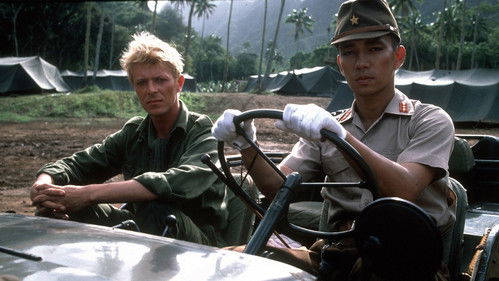
Island of Java, 1942, during World War II. British Major Jack Celliers arrives at a Japanese prison camp, run by the strict Captain Yonoi. Colonel John Lawrence, who has a profound knowledge of Japanese culture, and Sergeant Hara, brutal and simpleton, will witness the struggle of wills between two men from very different backgrounds who are tragically destined to clash.
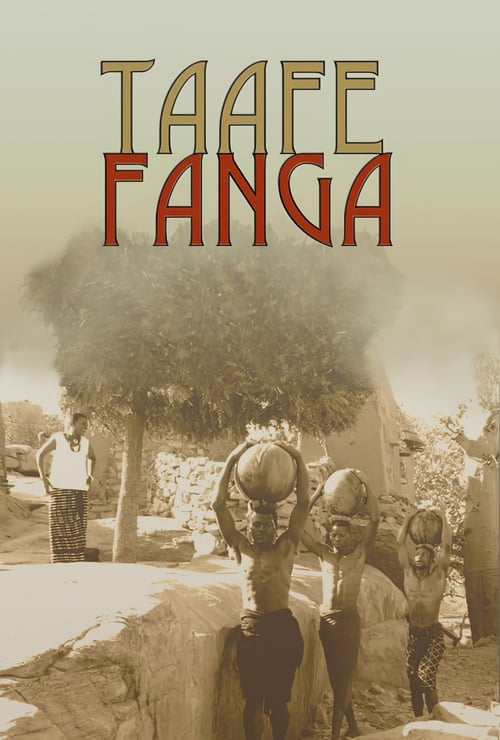
A group of woman in a Malian village find a mystical mask. Using the mask, they reverse gender roles, women act like men, and men act like women.

The film highlights the biological aspect of albinism, which is a genetic and hereditary abnormality that affects not only pigmentation, but also, and above all, the physical and moral conditions of people.

The film Gwacoulou relates the legend of how peace was kept by the transformation of three pairs of twins and their mother into the three stones of a traditional home and its cauldron “the canari”. Nowadays, these stones are still one of the pillars of Bambara tradition in Africa. Their symbolism speaks to us of marriage and discretion, fraternity and solidarity, friendship and support.
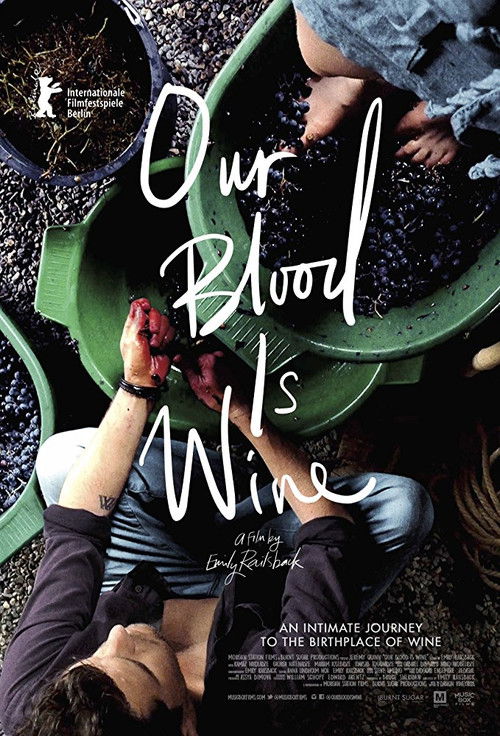
Filmmaker Emily Railsback and award-winning sommelier Jeremy Quinn provide intimate access to rural family life in the Republic of Georgia as they explore the rebirth of 8,000-year-old wine-making traditions almost lost during the period of Soviet rule.

Tirza Hightower is a jet setting executive ready to shake things up and lay low for awhile. Kam Mercer, a corporate brand strategist by day, is an artist who might have just found his way out of the corporate sector. Both at a crossroads, they meet at what seems like an inopportune time. Things could go left or right, when is the right time to take a chance on connection?

An account of the brief life of the writer Albert Camus (1913-1960), a Frenchman born in Algeria: his Spanish origin on the isle of Menorca, his childhood in Algiers, his literary career and his constant struggle against the pomposity of French bourgeois intellectuals, his communist commitment, his love for Spain and his opposition to the independence of Algeria, since it would cause the loss of his true home, his definitive estrangement.

Shokichi, the owner of the clothing store, lives with his daughter Hideko and plans to open an art gallery. One day, Hideko led a handsome art student, Shohei and a poor painter, Sohei. Sohei’s painting was praised by a great printer at the completion ceremony of the art gallery. Since he became successful as a painter, but he looked quite indifferent. Around the same time, Shohei’s sister brought Sohei’s pictures to the gallery and Shokichi noticed that she was a daughter of his first love.

The main character of the film is a journalist — Liza, a woman in her mid-forties, who, 25 years ago, worked as a war reporter during the Georgian-Abkhazian military conflict (1992-1993), which Russia provoked for the purpose of occupying Abkhazia.

A new reading of the historical period that began with the reign of the Catholic Monarchs (1479-1516) and the discovery of America (1492), as well as an analysis of its undeniable influence on the subsequent evolution of the history of Spain and the world.

The young man is cleaning an oil lamp.
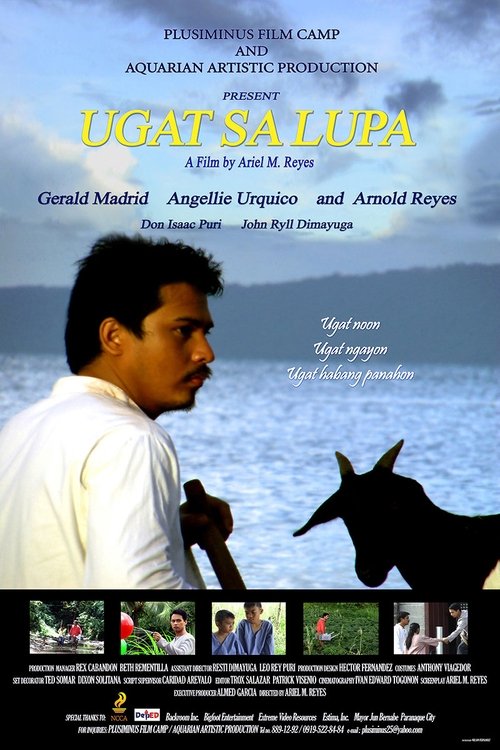
“Ugat sa Lupa” is a non-dialogue film about a farming family who lives in an island. It dramatizes the family’s hardships living in an island bereft of fresh water, hence their struggle to fetch water from another island to water the plants periodically. It is also about family relationships and sacrifices of elder siblings for the younger ones.

The children Julian, Dick and Anne spends a summer holiday at the Kirrin Farm, where there cousin Georgina lives with her dog Tim, and her parents. The tomboyish Georgina is punished for her poor school performance, and her father hires a private teacher.
After twelve years in the US, Kirsten returns home to her father with her American husband and their eleven-year-old son. Her father is a tough and cold businessman with whom she has never been on good terms. The couple soon separate, and Kirsten meets a former friend. Her father dies just as he is beginning to develop a good relationship with his grandson.