
Action
Adventure
Animation
Comedy
Crime
Documentary
Drama
Family
Fantasy
History
Horror
Music
Mystery
Romance
Science Fiction
Thriller
War
Western
Found 22 movies, 7 TV shows, and 0 people
Can't find what you're looking for?

Taras Shevchenko is an undeniable symbol of Ukraine. But what exactly made an ordinary man an idol and the most famous Ukrainian in our centuries-long history? And what was he really like in real life? Today, Akim Galimov will talk about the Shevchenko phenomenon in the Real History project.

Story of the formation of the Armed Forces, who found themselves in difficult conditions and had to choose between family, friends, acquaintances and the security of the country, the lives of millions and the chance for life of the state. They chose between fear, betrayal and insecurity and duty, glory and courage. They made their choice and thanks to this choice there is still such a state as Ukraine. And the exploits of these people must remain in the annals of history.
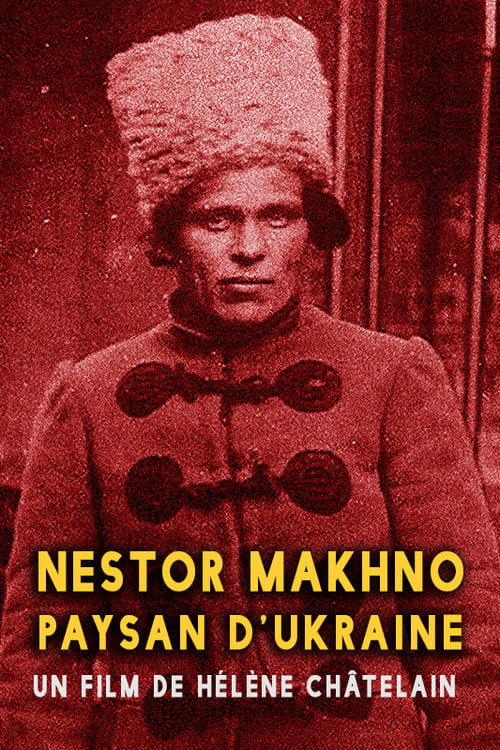
With breathless pace, Hélène Chatelain ("the woman" in "La Jetée") reconstructs the life of Nestor Makhno from his writings, Soviet propaganda films, reactions of workers today and the memory he has left in the hearts & minds of his people in Gouliaïpolié, in the east of the Ukraine.
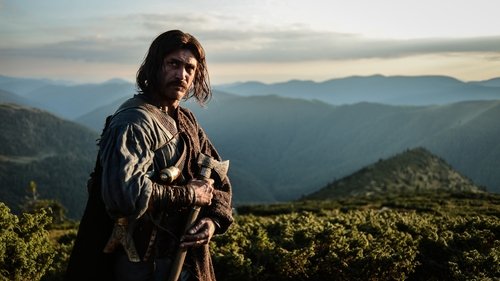
In the early eighteenth century, foreign rule means dark times for the Hutsuls of the Carpathians. The two Dovbush brothers become opryshkos - mountain outlaws. But the two brothers become enemies - one cares only about money, the other - Oleksa - fights for his people. The Carpathians are convulsed with a wave of uprisings. The aristocracy uses its military might to try to kill Dovbush and destroy his legend. But Dovbush outwits them. The desperate lords devise a devious plan and attack the invincible outlaw's Achilles heel - his love for his childhood sweetheart, Marichka. Who will be the assassin to attack the Opryshko whose immense strength and bravery inspired folk tales? Will the lords' treacherous plan destroy the hero before he can lead his people to freedom?

Ukrainian journalist Katya Soldak, currently living in New York City and working for Forbes magazine, chronicles Ukraine's history: its strong ties to Russia for centuries; how it broke away from the USSR and began to walk alone; the Orange Revolution, the Maidan Revolution, the Crimea annexation, the Donbass War; all through the eyes of her family and friends settled in Kharkiv, a large Ukrainian city located just eighteen miles from the Russian border.
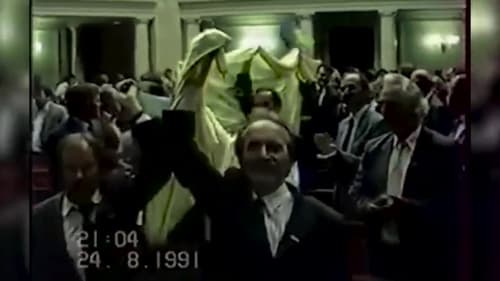
A film about the collective psychological traumas of Ukrainians.
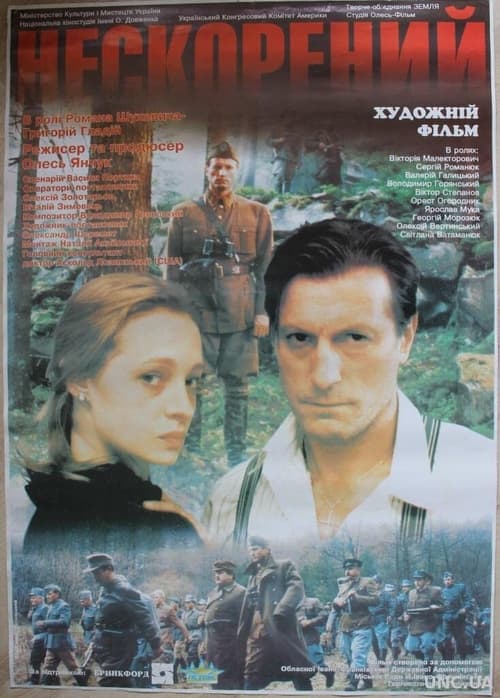
In 1950, long after the world has finished fighting World War II, a fight continues behind the newly drawn Iron Curtain: as the Ukrainians keep fighting both Nazi and Soviet abuses, General Roman Shukhevych (Hryhoriy Hladiy) is forced by brutal circumstances and his own sense of honor and duty to lead this effort as an underground war. As portrayed by the film, Shukhevych is a genteel family man who is also a complex character (revolted by ethnic discrimination, a music lover and a military genius) that with his charisma fuels his countrymen with desire for freedom. In the end, Shukhevych's efforts are unable to defeat the Soviets despite paying for his resistance with his life, but they re-enforce Ukrainian patriotism as an underground force until Ukraine finally recovers its freedom from Soviet tyranny.
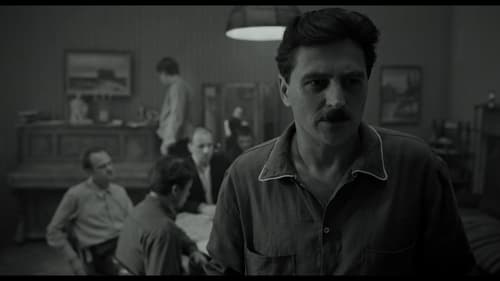
Kharkiv, the 1930s. The heyday of Ukrainian art. Ambitious young poet Vladimir Akimov happily settles in at the new luxury "Slovo" House built specifically for artists. He comes from the provinces and works as a proof-reader in a printing press, and has never even dreamed of living under one roof with prominent Ukrainian writers and artists. He thinks his own poetry is genius, but nobody takes his literary efforts seriously, not to mention the occasional chuckles over his epigone poems. But fate smiles at him. The head of the political intelligence agency suggests that he become the author of a play written earlier. Akimov agrees, signing a non- disclosure note. The poet has no idea what price he will pay for this success. “‘Slovo’ House” is a story about a generation of Ukrainian artists persecuted by the totalitarian system, unfolding against the backdrop of one of the largest genocides of the 20th century: the Holodomor, which caused the death of almost 7 million people.

In 1975 Dynamo Kyiv became the first Soviet team to win a major European trophy. The team’s rapid rise was remarkable and attributed to one man: Valeri Vasilievich Lobanovskyi. His technique as a manager is now a legend - not least for his imposing a fitness regime so brutal that his players looked upon the matches themselves as relaxing.
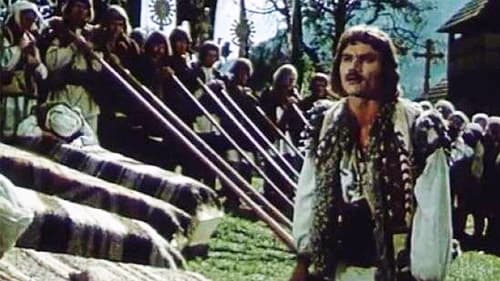
The story of the "Hutsul Robin Hood" Oleksa Dovbush, an 18th century Carpathian Mountains outlaw who's a popular figure of Ukrainian legend.
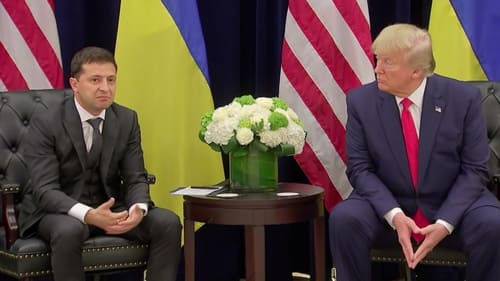
The rise of the comedian, actor and entertainer who became the improbable wartime leader. Exploring the man behind the series of game changing social media and TV appearances which have encapsulated the defiant response of a nation.
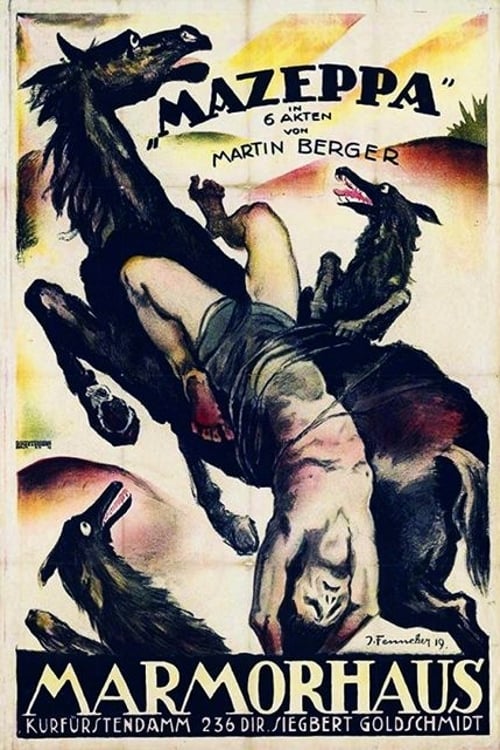
The film tells the story of Ivan Mazeppa, a Ukrainian page at the Polish court who has an affair with the young wife of a much older count. Outraged when he learns of the incident, the nobleman has Mazeppa tied naked to a wild horse which is then released into the wilderness. The bulk of the poem describes the long hazardous journey during which Mazeppa almost dies twice but ultimately survives and returns to his native Ukraine.
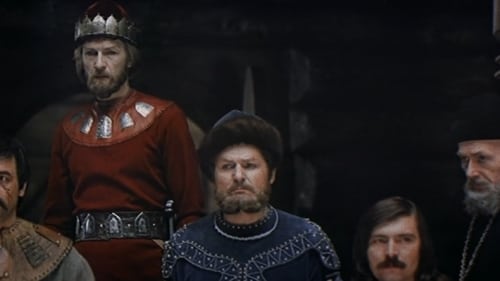
In the XIth century Kyivan Rus' (Ukraine-Rus') reached its zenith under the reign of Yaroslav. He established enduring ties with many of the ruling European dynasties, strengthened the borders of Rus' and tried to free it from the influence of the Byzantine Empire. Since 988 the church of Rus' had been autonomous, apart from the right of Constantinople to appoint the Metropolitan.
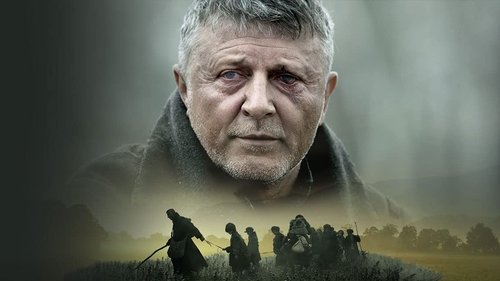
American boy Peter and blind minstrel Ivan are thrown together by fate amidst the turbulent mid-30s Soviet Ukraine.
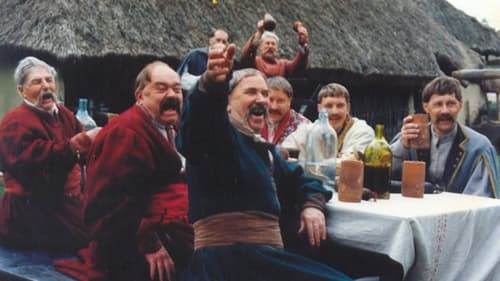
The Black Council gives a vivid picture of the different levels of society in seventeenth-century Ukraine. The main theme is the need for people to be motivated by high ideals as they engage in the struggle of truth with injustice.
Ukraine. The end of the XV century. All gunpowder made in factories suddenly disappears. The company of cossacks led by Maksym Trytuz comes together to find one of the transports that carries gunpowder to the Zaporozhian Sich.
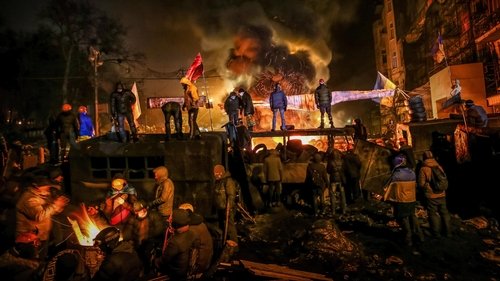
Over 93 days in Ukraine, what started as peaceful student demonstrations became a violent revolution and full-fledged civil rights movement.

As Carpathian legend has it, Oleksa Dovbush was a heroic outlaw with excellent fighting skills and a gift to predict the future. He was left an orphan as a small boy after a local lord murdered Oleksa's mother. After spending his childhood in exile in the mountains, he returned as a grown man to avenge his mother's death. Oleksa gathered followers to begin a crusade against the lord, but destiny made other plans for him.
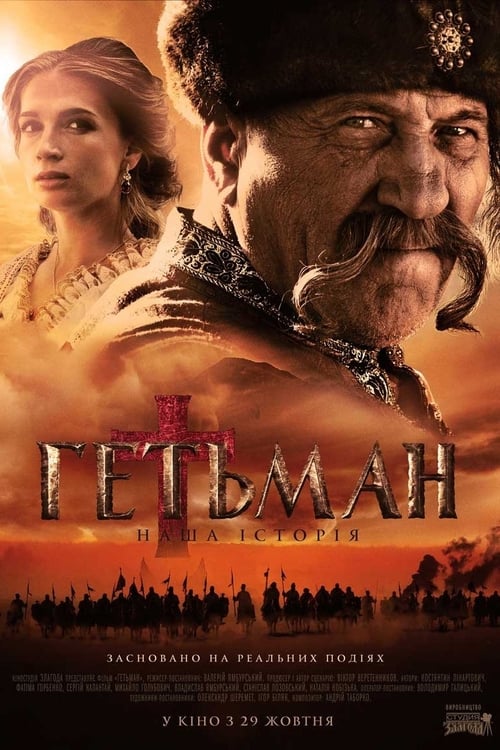
Artistic portrayal of the difficult personality of Bohdan Khmelnytsky and his dramatic life against the backdrop of National-liberation war in the mid-17th century and the Cossack state building. The main storyline shows Khmelnytsky not only as hetman and commander, but reveals his private life and his complicated relations with his beloved woman.
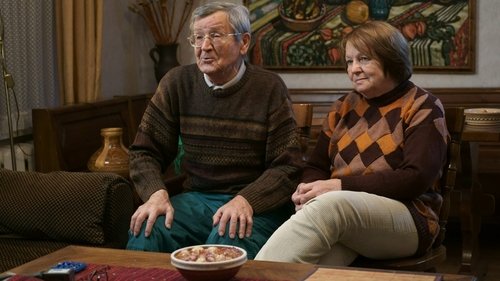
Ivan Dziuba - literary critic, public figure, academician of the National Academy of Science of Ukraine - belongs to the "sixties". He fully takes care of all the miscalculations and unfulfilled promises of his generation. Reflects on why the illusions were lost and why so few dreams came true ... Let's see and listen to him with his wife Martha, a Lviv woman who was his guardian angel. Together - all life. Exactly as they are, the right is the definition - the conscience of the nation.
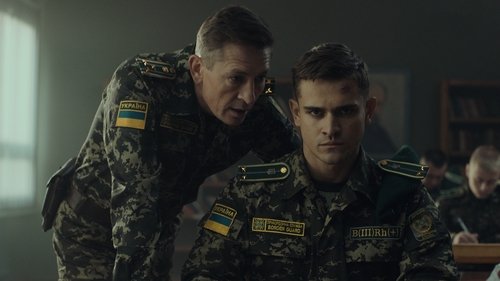
The story of trust and its absence against the background of events unfolding in Eastern Ukraine in early 2014. The main topic is revealed through the prism of the Luhansk border base, whose fighters the separatists and Russian special services tried unsuccessfully force to betray their country.
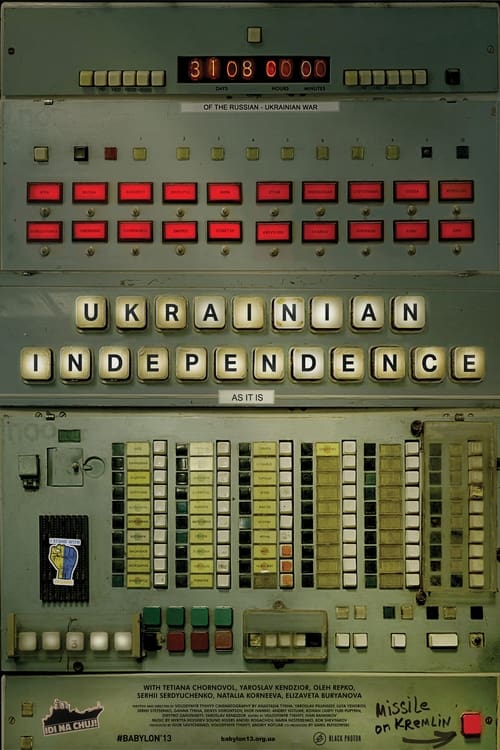
The film’s events take place on a single day: August 24, 2022, the day Ukraine celebrates the 31st anniversary of the renewal of independent statehood. The film combines places and people that best capture the country’s wartime spirit. The locations are: the relatively safe cities of Kyiv and Lviv; the cities under daily missile fire of Kharkiv and Mykolaiv; a trench at the frontlines near Donetsk; and the beaches of Odesa. The film presents a day in the life of a beach police patrol, a woman anti-tank missile operator, a water delivery driver, a mortar unit soldier, a rapid assault unit soldier, a 14-year-old pub janitor, an artist and a former member of parliament. Together, these people and places create an engaging mosaic of a day in the life of Ukraine.