
Drama
Comedy
Action & Adventure
Animation
Documentary
Family
Kids
Mystery
News
Reality
Sci-Fi & Fantasy
Soap
Talk
War & Politics
Western

Ernst Ingmar Bergman (July 14, 1918 – July 30, 2007) was a Swedish filmmaker. Widely considered one of the greatest and most influential filmmakers of all time, his films are known as "profoundly personal meditations into the myriad struggles facing the psyche and the soul." Bergman directed more than 60 films and documentaries for cinematic release and for television screenings, most of which he...
Explore all TV shows appearances
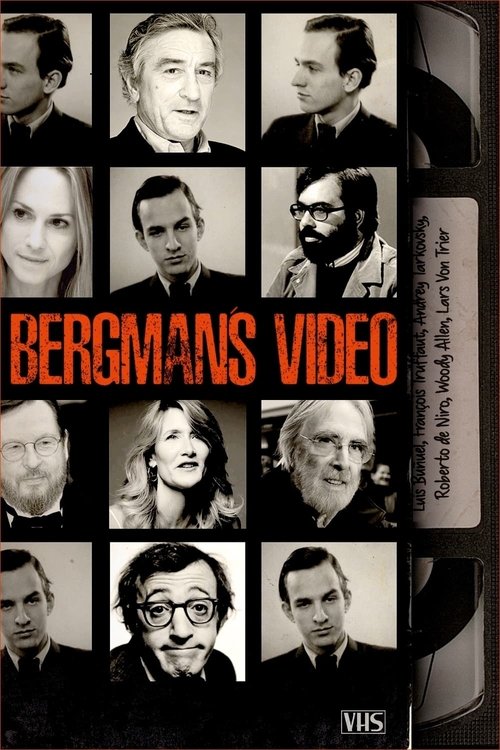
In the sixties, Swedish filmmaker Ingmar Bergman (1918-2007) built a house on the remote island of Fårö, located in the Baltic Sea, and left Stockholm to live there. When he died, the house was preserved. A group of very special film buffs, came from all over the world, travel to Fårö in search of the genius and his legacy. (Released in 2013, edited and abridged, as Trespassing Bergman.)

The desolate and mysterious island of Fårö, Sweden, Baltic Sea, 2004. Swedish master filmmaker Ingmar Bergman (1918-2007) looks back on his personal and artistic life; a journey through more than sixty years devoted to film, plays and television programs. (Released in 2006, edited and abridged, as Bergman Island.)

The Guldbagge Awards is an official and annual Swedish film awards ceremony honoring achievements in the Swedish film industry. Winners are awarded a statuette depicting a rose chafer, better known by the name Guldbaggen. The awards, first presented in 1964 at the Grand Hôtel in Stockholm, are overseen by the Swedish Film Institute. It is described as the Swedish equivalent of the Academy Awards. The awards ceremony was first televised in 1981.
The Guldbagge Awards is an official and annual Swedish film awards ceremony honoring achievements in the Swedish film industry. Winners are awarded a statuette depicting a rose chafer, better known by the name Guldbaggen. The awards, first presented in 1964 at the Grand Hôtel in Stockholm, are overseen by the Swedish Film Institute. It is described as the Swedish equivalent of the Academy Awards. The awards ceremony was first televised in 1981.
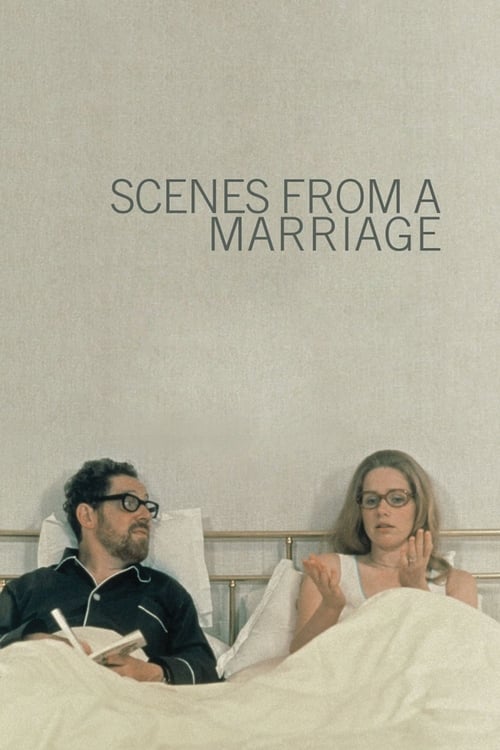
Johan and Marianne are married and seem to have it all. Their happiness, however, is a façade for a troubled relationship, which becomes even rockier when Johan admits that he's having an affair. Before long, the spouses separate and move towards finalizing their divorce, but they make attempts at reconciling. Even as they pursue other relationships, Johan and Marianne realize that they have a significant bond, but also many issues that hinder that connection.
The Dick Cavett Show has been the title of several talk shows hosted by Dick Cavett on various television networks.
No plot available for this tvshow.
"The Beards" - The framework was that the participants would produce a relatively current entertainment program titled Concrete. During the meetings ideas and sketches were presented. Most of it was rejected.
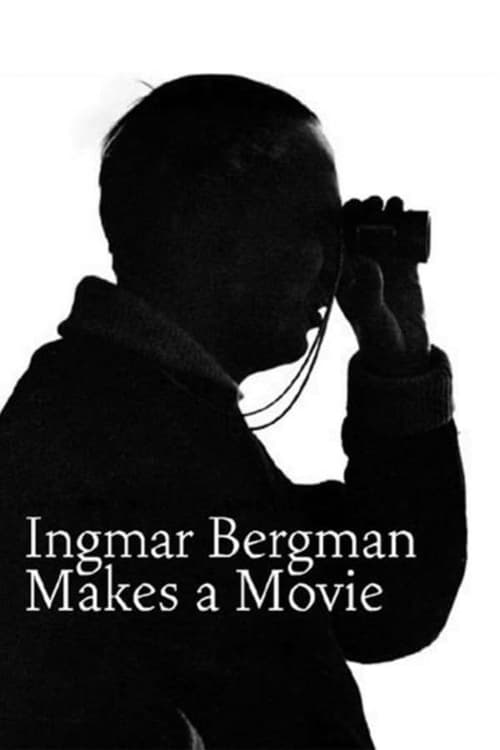
The year is 1961 and Ingmar Bergman is making a movie. While planted on the scene as apprentice to Bergman, Vilgot Sjöman (director, I Am Curious–Yellow, 1967), suggests to Swedish Television that they take the opportunity to record with the acclaimed director. In August, Sjöman and the television crew begin to capture what would become a comprehensive five-part documentary on the making of Winter Light, offering views of script development, set construction and lighting, rehearsals and editing, as well as intimate conversations with Bergman and members of his cast and crew. Footage from the film’s Swedish premiere delivers immediate audience reactions and the critics’ reviews the following day.

The Bambi, often called the Bambi Award and stylised as BAMBI, is a German award presented annually by Hubert Burda Media to recognize excellence in international media and television to personalities in the media, arts, culture, sports, and other fields "with vision and creativity who affected and inspired the German public that year", both domestic and foreign. First held in 1948, it is the oldest media award in Germany. The trophy is named after Felix Salten's book Bambi, A Life in the Woods and its statuettes are in the shape of the novel's titular fawn character. They were originally made of porcelain until 1958, when the organizers switched to using gold, with the casting done by the art casting workshop of Ernst Strassacker in Süßen.
Subscribe for exclusive insights on movies, TV shows, and games! Get top picks, fascinating facts, in-depth analysis, and more delivered straight to your inbox.