
Drama
Comedy
Action & Adventure
Animation
Documentary
Family
Kids
Mystery
News
Reality
Sci-Fi & Fantasy
Soap
Talk
War & Politics
Western
Found 33 movies, 38 TV shows, and 0 people
Can't find what you're looking for?
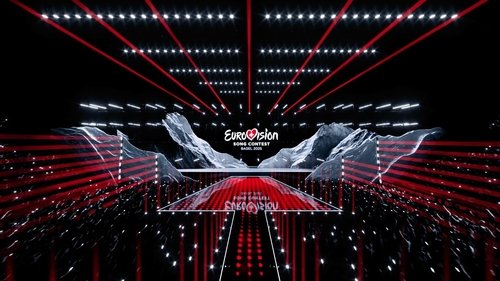
The Eurovision Song Contest is an international song competition, organised annually by the European Broadcasting Union (EBU) and featuring participants representing primarily European countries. Each participating country submits an original song to be performed on live television and radio, transmitted to national broadcasters via the EBU's Eurovision and Euroradio networks, with competing countries then casting votes for the other countries' songs to determine the winner.

Eurovision 2018 beyond what you've seen on television screens. What is the story of the first Eurovision Song Contest made in Portugal? You can see what the stage construction is, the rehearsals, the team work and the bustle behind the scenes. Unpublished are revealed about an unforgettable operation that its protagonists help to record.
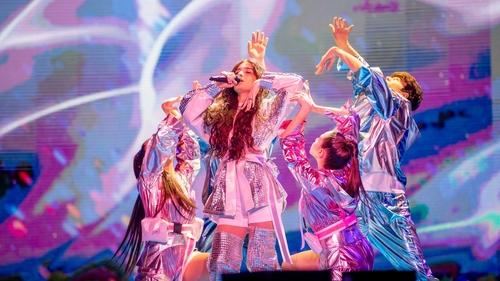
The Junior Eurovision Song Contest, often shortened to JESC, Junior Eurovision or Junior EuroSong, is a song competition which has been organised by the European Broadcasting Union (EBU) annually since 2003 and is open exclusively to broadcasters that are members of the EBU. It is held in a different European city each year, however the same city can host the contest more than once.
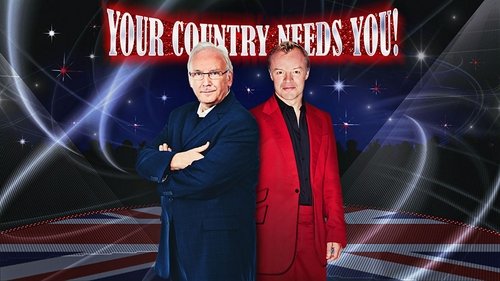
Graham Norton hosts the annual search for a singer or group to represent the United Kingdom at the Eurovision Song Contest.

Get ready for Eurovision... A Little Bit More! The Eurovision spin-off show that features exclusive performances from the Liverpool 2023 participants. The ‘Class of ‘23’ were tasked to submit reworked or remixed versions of their Eurovision entries; original material; and cover versions of their favourite songs. The results are now in and will be introduced by a different Eurovision legend each week over the next three weeks in a series of one-hour shows.
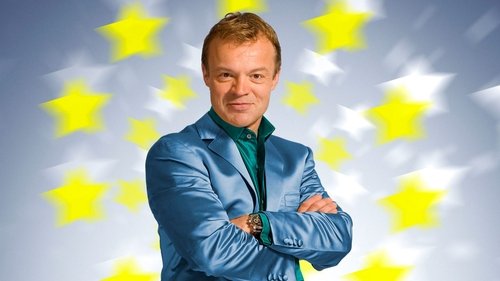
The Eurovision Dance Contest 2007 was the 1st Eurovision Dance Contest a dance entertainment co-production between the EBU and the BBC. The first ever pan-European dance competition was held on 1 September 2007 in London, United Kingdom with the participation of 16 countries. Viewers cast their votes by telephone and SMS text message voting on each couple's two dances – the first being ballroom or Latin with the second being freestyle, with a "national" flavour. The first ever winner of the contest was Finland who received a total of 132 points. 2nd place went to Ukraine 3rd to Ireland, 4th to Poland and 5th place to Austria.
Australia's National selection for the Eurovision Song Contest.

The Eurovision Young Musicians is a biennial classical music competition for European musicians that are aged between 12 and 21. It is organised by the European Broadcasting Union (EBU) and broadcast on television throughout Europe, with some countries holding national selections to choose their representatives for the contest.

National music competition to select Malta's entries for the Eurovision Song Contest.
No description available for this show.
No description available for this show.
No description available for this show.
No description available for this show.

No description available for this show.
No description available for this show.
No description available for this show.

Competing countries who are members of the European Broadcasting Union (EBU) are eligible to participate in the Eurovision Choir of the Year. Each competing country is represented by a professional choir, and each performes a choral piece lasting no more than six minutes in length. Each piece may include singular or several musical works or of a free genre; but must contain national or regional influence from the participating country.
The Kdam Eurovision in short known as the Kdam is the Israeli national preselection of the Eurovision Song Contest. The competition was first introduced in 1981. Israel has won the Eurovision Song Contest three times. Izhar Cohen and Alphabeta in 1978 and Milk and Honey in 1979 took part in the Festival HaZemer VeHaPizmon, emerged as winners of the preselection, and went on to win the Eurovision Song Contest. Dana International, the Israeli winner in 1998 was chosen in an internal selection contest and not at Kdam.
Takes a look at Irish successes at Eurovision through the eyes of its winners.
Ethnikos Telikos is the national selection used by Greece to select its entry for the Eurovision Song Contest.

The annual music competition organised by Swedish public broadcasters Sveriges Television and Sveriges Radio to determine the country's representative for the Eurovision Song Contest.

Dansk Melodi Grand Prix is an annual music competition organised by Danish public broadcaster Danmarks Radio, which determines the country's representative for the Eurovision Song Contest. The festival has produced three Eurovision winners and thirteen top-five placings.

Eurosong was the Flemish selection for the Eurovision Song Contest. It selected the Belgian entry to the Contest every second year. The last Eurosong was in 2008. Due the good result of Tom Dice in 2010, who was chosen internally, the VRT decided to cancel Eurosong.
Melodi Grand Prix is an annual music competition organised by Norwegian public broadcaster Norsk Rikskringkasting. It determines the country's representative for the Eurovision Song Contest, and has been staged almost every year since 1960. The festival has produced three Eurovision winners and nine top-five placings for Norway at the contest. However, Norway holds the record for the number of entries who have come last since entering Eurovision; 11 in all. Despite this, the competition still makes considerable impact on music charts in Norway, and in other Nordic countries, with the 2008 winner topping the Norwegian charts.

Uuden Musiikin Kilpailu (abbreviated UMK) is an annual music contest organised by the Finnish public broadcaster Yle. UMK began in 2012 as a new concept for the Finnish selection for the Eurovision Song Contest, replacing the original Finnish Eurovision Song Contest qualifying event (Suomen euroviisukarsinta) which had been held since 1961.
„Eurovizijos dainų konkurso nacionalinė atranka“ is the national final to select the Lithuanian entry for the Eurovision Song Contest.
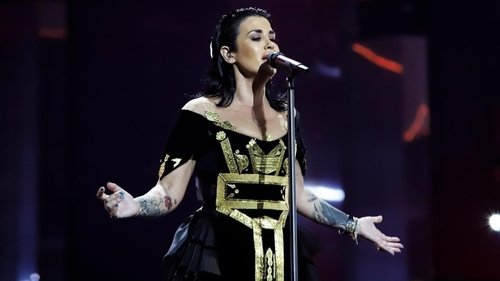
A long-running music competition that debuted in 1962 and has provided Albania's representative for Eurovision since 2004.

Spain, 1968, an ambitious television executive is tasked with winning the Eurovision Song Contest. Massiel's catchy "La La La" triumphs with an iconic performance. This is the story behind that unexpected victory.
Lithuanian national auditions for Eurovision contest

Music competition organised by Icelandic public broadcaster Ríkisútvarpið (RÚV) to determine its entry for the Eurovision Song Contest.
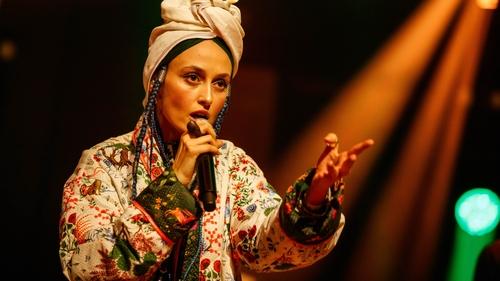
Yevrobachennia Natsionalnyi Vidbir (often shortened to Vidbir) has served as Ukraine's national selection for Eurovision since 2016.

Four loud kids, the biggest festival stages in the world, thousands of screaming fans. Get on the road with us, rockin’ Europe, America, Asia and our home too, Italy. This is Måneskin.
Eesti Laul is the national final in order to select the Estonian entry for the Eurovision Song Contest.
In May 2017, "Amar Pelos Dois", in the voice of Salvador Sobral, gave Portugal its first victory at the Eurovision Song Contest. It was the opposite of the song "festivaleira" but, in the voice of a charismatic and different interpreter between the different ones, the composition of Luísa Sobral made history.
Dora is Croatia's national selection for Eurovision.
The national competition to select San Marino's Eurovision entry.
Music entertainment show used as the Armenian national selection for the Eurovision Song Contest.
Serbian music festival used as the national selection for Serbia's representative at the Eurovision Song Contest.