Action
Adventure
Animation
Comedy
Crime
Documentary
Drama
Family
Fantasy
History
Horror
Music
Mystery
Romance
Science Fiction
Thriller
War
Western

Late Academy Award–winning director Anthony Minghella made his Met debut on Opening Night of the 2006–07 season, with a now-classic staging of Puccini’s perennial heartbreaker Madama Butterfly. This documentary follows the production’s creation—from the Met’s subterranean rehearsal rooms to the main stage and on to the premiere—as Minghella worked with the opera’s stars, soprano Cristina Gallardo-Domâs as Cio-Cio-San and tenor Marcello Giordani as Pinkerton.
Director: Susan Froemke
No Reviews Available

In the awe-inspiring Teatro Olimpico,Vicenza, Cecilia Bartoli, recognised as one of the best singers of our time, gives the most outstanding recital of work from a variety of composers such as Caccini, Schubert, Handel, Vivaldi, Bellini, Donizetti,Mozart, Rossini, Viardot and Bizet.
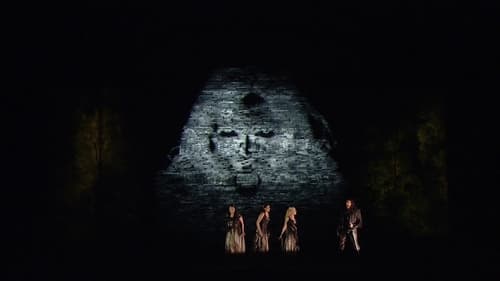
Götterdämmerung, the final instalment of Wagner’s Ring of the Nibelung, is a story of human passions. Two essentially benevolent creatures, involved with and possibly doomed by their traffic with the gods, find treachery and evil in the world of the humans, and are ruined by the dark side of humanity. Iréne Theorin, acclaimed worldwide for her portrayal of Wagner’s heroines, stars as Brünnhilde opposite Lance Ryan, who continues his radiant portrayal of the tragic hero Siegfried. The strong cast also includes Mikhail Petrenko as the dark antagonist Hagen and Johannes Martin Kränzle, who once again shines as his father Alberich. Waltraud Meier has a memorable appearance as Brünnhilde’s sister Waltraute. With this 2013 recording of Götterdämmerung, the musically and visually compelling Scala Ring Cycle by Daniel Barenboim and Guy Cassiers was completed and proved to be one of the highlights of the Richard Wagner bicentenary.
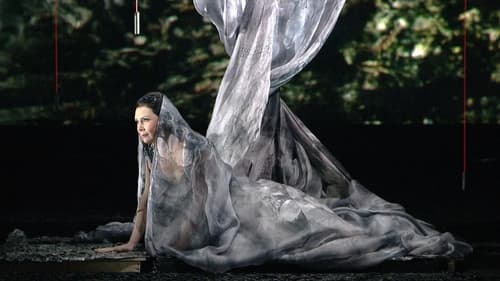
In Siegfried, the “Second Day” or third evening of the Ring Cycle, we meet the pivotal hero of the epic tale. The energetic drive from Die Walküre is pursued here while Siegfried finally recaptures the mighty ring from Fafner the Dragon and awakens Brünnhilde from her penal sleep on the great rock. Lance Ryan, having interpreted this role on the greatest stages of the world including the Bayreuth Festival, portrays the naïve hero. His antagonists are Peter Bronder, great and agile as Mime, Terje Stensvold, an experienced Wanderer and Johannes Martin Kränzle, who continues his mean and deceitful depiction of Alberich. The leading ladies are Nina Stemme, once again unrivalled as Brünnhilde and Anna Larsson, moving as the God-mother Erda.
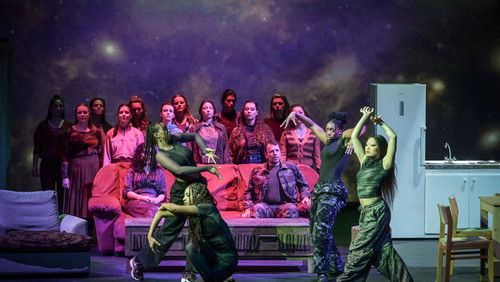
A return to its roots for Castor et Pollux, Jean-Philippe Rameau’s lyric tragedy first performed in 1737 at the Académie royale and inspired by the mythological episode of the Gemini. Rarely performed in its original version – the score was reworked by Rameau himself in 1754 –, this daring work plays on contrasts and expressiveness, as in the famous “Tristes apprêts”. The aria is sung by Télaïre mourning the death of her fiancé Castor, killed in battle, before his twin brother Pollux descends into the Underworld to ask his father, Jupiter, to bring him back to life. While this opera celebrates brotherly love, its prologue poses an essential question for director Peter Sellars: how do you stop a war and its attendant hatred and resentment?
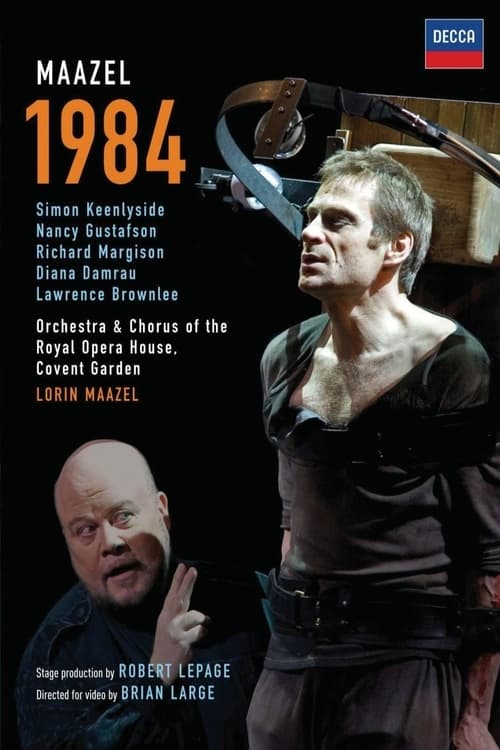
Inspired by one of the twentieth century's greatest novels, composer Lorin Maazel evokes Orwell's totalitarian nightmare, where "Big Brother" is always watching, and those guilty of "thoughtcrime" are condemned to face their worst fears in the infamous "Room 101". Filmed during world premiere performances of Robert Lepage's spectacular and psychologically gripping Royal Opera production and conducted by the composer, an international cast brings George Orwell's dark vision to shattering operatic life.
Subscribe for exclusive insights on movies, TV shows, and games! Get top picks, fascinating facts, in-depth analysis, and more delivered straight to your inbox.